

David L. Ulin’s “American Flash Fiction: An Anthology” will be published by Library of America in September. He is a professor of English at USC, where he edits the journal Air/Light.
There was a street fair kind of atmosphere on Wilshire Boulevard last week for the opening of three new subway stations on Metro’s D Line. At Wilshire/La Brea, tables filled the outdoor plaza as a KCRW deejay pumped out music. Local restaurants, including Pink’s Hot Dogs, served free lunch to customers — perhaps also passengers? — waiting in long lines.
At Wilshire/Fairfax, Los Angeles Mayor Karen Bass, Sen. Adam Schiff and Metro CEO Stephanie Wiggins were among the speakers during an opening ceremony on the roof of the Petersen Automotive Museum. (The irony of the location was noted in more than one set of remarks.) Earlier, they and other dignitaries, including former L.A. mayors Antonio Villaraigosa and Eric Garcetti, had jammed the station platform after arriving on the first train to carry passengers beneath this stretch of the boulevard.

Just $33.33. It's less than a tank of gas or a bag of groceries. But that's all it would take from each of our readers to keep Golden State going through 2026.
Even Beverly Hills, which vigorously — indeed, bitterly — contested the extension, managed to be represented, although the celebration at Wilshire/La Cienega, a few blocks over the city line, was the smallest and most constrained of the three.
Everywhere, you could feel a palpable sense of excitement as well as what I would characterize as hope. A shared vision. An appreciation of the opportunity to shift from private space (our cars) to public square. People laughed, took selfies, congratulated one another. It was as if we had built out the D Line ourselves.
In a way, of course, this is the case. Much of the project’s funding has come from a pair of ballot measures, R and M, voted for by residents willing to raise the sales tax throughout the county.
Our optimism arises from not only the expansion of public transportation in Los Angeles, but also an awareness of its tangled history. Proposals for a Wilshire Boulevard subway, a recent Los Angeles Times piece recalls, date to the early 1960s, although an elevated rail from Beverly Hills to Santa Monica was floated as far back as 1925. One impediment has long been Westside animus. Now that the D Line extension is up and running, with two additional stages — first to Century City and then to Westwood — scheduled to open in 2027, the fever dream of rail transit spanning nearly the length of one of the most heavily traveled transportation corridors in the United States has become a reality.
 Richard Barton
As someone who lives along the line, I share the view of those who call it transformative.
A 20-minute ride from Mid-Wilshire to downtown at all hours?
A station within walking distance of my house?
A way to commute to USC, where I teach, or get to Pasadena, where my father is in assisted living, without having to get behind the wheel of a car?
I’ve been waiting for this, it feels like, as long as I’ve been in Los Angeles. Born and raised in Manhattan, I found I most missed the subway after I moved to Southern California in 1991.
In the decades since, I’ve ridden the system whenever feasible. I was at Union Station in January 1993 for the debut of the first short five-stop leg of the Wilshire subway, then known as the Red Line. To get all the way to La Cienega by subway feels like the closing of a circle.
Or no, not a closing, but an opening.
Over the ensuing week, I took the D Line a fair amount. On Sunday, I went to Koreatown, and a few days later to Pasadena, which gave me plenty of time to think about what’s working in the system and what might be improved.
 Robert Greene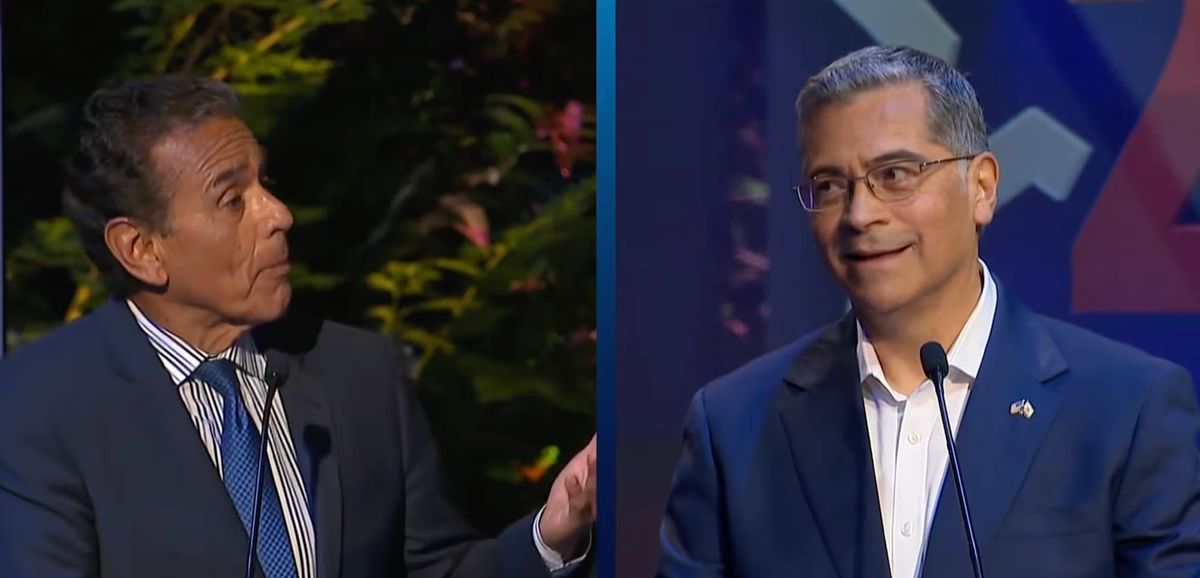
The success of rail transit in Los Angeles is by no means a sure thing. The system faces challenges that are complex and even worrisome. For one thing, Metro rail remains a novelty to many Angelenos, its reach expanding but incomplete. In contrast to the crowds at the opening, my subsequent D Line rides took place on largely empty trains, bookended by equally empty platforms.
Maybe that’s to be expected for brand new stations. After all, Metro rail has considerable first mile-last mile issues.
Although more than 30 stations have been built over the last decade, they remain too few and too far apart. There are not enough north-south connectors; as of yet, a rail rider wanting to connect from the D Line to the E Line, which runs to Santa Monica, must travel first in the wrong direction, to downtown. (A bus connection will be available on Westwood Boulevard, I learned during a Metro webinar after the opening, but not until the third stage of the extension opens.) Recently, plans were approved to extend the K Line, which runs north-south along the Crenshaw Corridor, and to build a Sepulveda Pass subway into the San Fernando Valley. But neither will be operational for 20 years, if that.
And there’s the matter of safety, which has improved since the pandemic but still feels fraught on some trains and in certain stations, particularly downtown. Homeless people sleep or scuffle in the cars and populate the platforms. The same might be said of many mass transit systems. But in Los Angeles, just beginning to reframe itself as more than automobile-centric, this can become a reason not to ride.
Paul Thornton
Ridership here is a fraction of, say, New York’s, and trains run far less frequently: every ten minutes on the D Line during peak periods, and double that in off hours. This affects both efficiency and security. “Frequency of how often a bus or train arrived is the No. 1 solution that helps people feel safer,” UCLA’s Madeline Brozen told Oren Peleg of the New Yorker last week. “Once riders are on the bus or train, they’re in the safest part of the system.”
Frequency, however, Peleg added, “is partially a function of high ridership.”
Such a Catch-22 had led detractors to dismiss our above- and below-ground rail system as failed even as it is finally finding its own shape. But I have a different view.
Metro rail remains a work in progress, an attempt to reimagine the city from within. In that sense, it forms a necessary crucible for two opposing visions of Los Angeles. One is backwards gazing, rooted in a fading status quo that was never all that rosy. It presents fear and intolerance as common sense. The other looks ahead to a more inclusive Los Angeles, beginning at the level of the street. The promise here is that the trains will help connect us, not just literally, as they run from destination to destination, but also as they bring together communities, neighborhoods, people.
My Metro rail ride to Pasadena highlighted the challenges and the potential of the moment. On the one hand, the trip took longer than I’d hoped — over an hour each way, including a 15-minute walk to and from my father’s place. On the other, it was a perfect city day. I rode with students and families, and one man en route to LAX (amazing). I saw people on their way to work. Most of us kept to our phones or looked out the windows. But we were sharing space. This is the most essential thing about mass transit, the way it reminds us that community grows larger when we participate.
Is the system perfect? Far from it. But why let the perfect be the enemy of the good?
See you on the train.
BOGO alert: This month only, new subscribers to Golden State also get a bonus paid subscription to Laughing Leads to Crying, a newsletter by the talented Josh Gohlke.


