

Guess when this headline appeared in the Los Angeles Times: “MacArthur Park: Police Try to Retake It From Drug Dealers.” If you said after Wednesday’s big drug bust at the park, you’d be off by 37 years: That headline ran in 1989.
MacArthur Park west of downtown Los Angeles has been plagued by rampant drug use and crime for decades. But in the last year it has become the focus of intense media coverage, standing in for city failures on housing, drug treatment, crime and trash cleanup. The incumbent councilmember, Eunisses Hernandez, has been blamed for many of its ills, so it’s a hot topic in the race for L.A. City Council District 1.

Golden State needs your help to survive beyond the few months of operating funds we have left. We're asking readers to pitch in $33.33 apiece to our "Spring Survival" drive so we can keep publishing and paying watchdog journalists for their work.
Last week, I asked Hernandez and the four challengers running against her – Maria “Lou” Calanche, Raul Claros, Nelson Grande and Sylvia Robledo – via email to explain what they would do to make the park a safe and clean community space. The problems that plague MacArthur Park touch on numerous core city functions, and their responses offer insight into how they would function on the council.
Eunisses Hernandez
Hernandez’s critics often say her support for harm-reduction programs in MacArthur Park amounts to enabling public drug use. She defended the effort, which includes sending out street "peace ambassadors" and health workers. She also mentioned her support of a plan to close Wilshire Boulevard to cars through the park, which she has said will improve pedestrian safety.
Notably absent from her list was any mention of increased Los Angeles Police Department presence, something her opponents highlight is a key difference between their approaches and Hernandez’s. She cited a Los Angeles County report showing a sharp decline in overdose deaths among the unhoused residents in the ZIP code that includes MacArthur Park as evidence that the public health interventions she supports are working.
 Mariel Garza
Maria 'Lou' Calanche
In her response, the former L.A. police commissioner and youth advocate blamed Hernandez for the problems in the park, accusing her of neglecting upkeep of the grass and a new playground that opened before she took office in late 2022.
Calanche said she would enforce 41.18, the city’s ordinance limiting camping in areas near schools and parks, and knows how to build relationships between the community and law enforcement because of her time on the Los Angeles Police Commission.
She also said she would demand accountability from the LAPD and other departments so "our public spaces are actively maintained," which sounds like something any councilmember would support.
Raul Claros
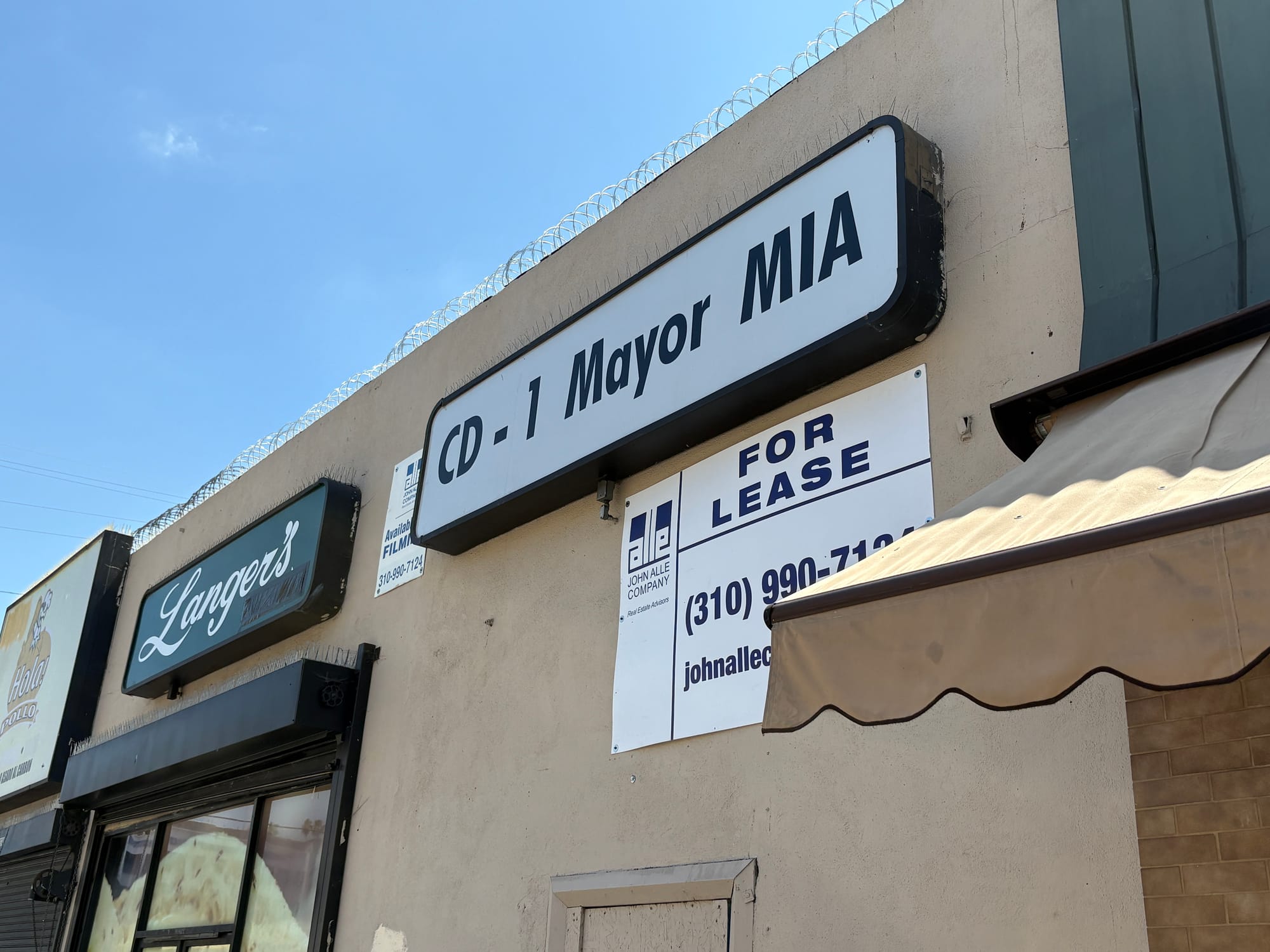
The community organizer did not respond to my emailed question, but he has made fixing MacArthur Park a centerpiece of his campaign. He has been critical of needle exchange programs as a vector exacerbating drug use in the area – echoing the owner of nearby Langer’s Deli – and called for armed city park rangers in MacArthur Park (a position that drew some audible gasps at one forum I attended). He also supports enforcing 41.18.
In what seems like a campaign stunt (though he insists he’s dead serious about it), Claros has promised to live in a trailer and set up a disaster command post at the park for an unspecified period of time.
Joel Bellman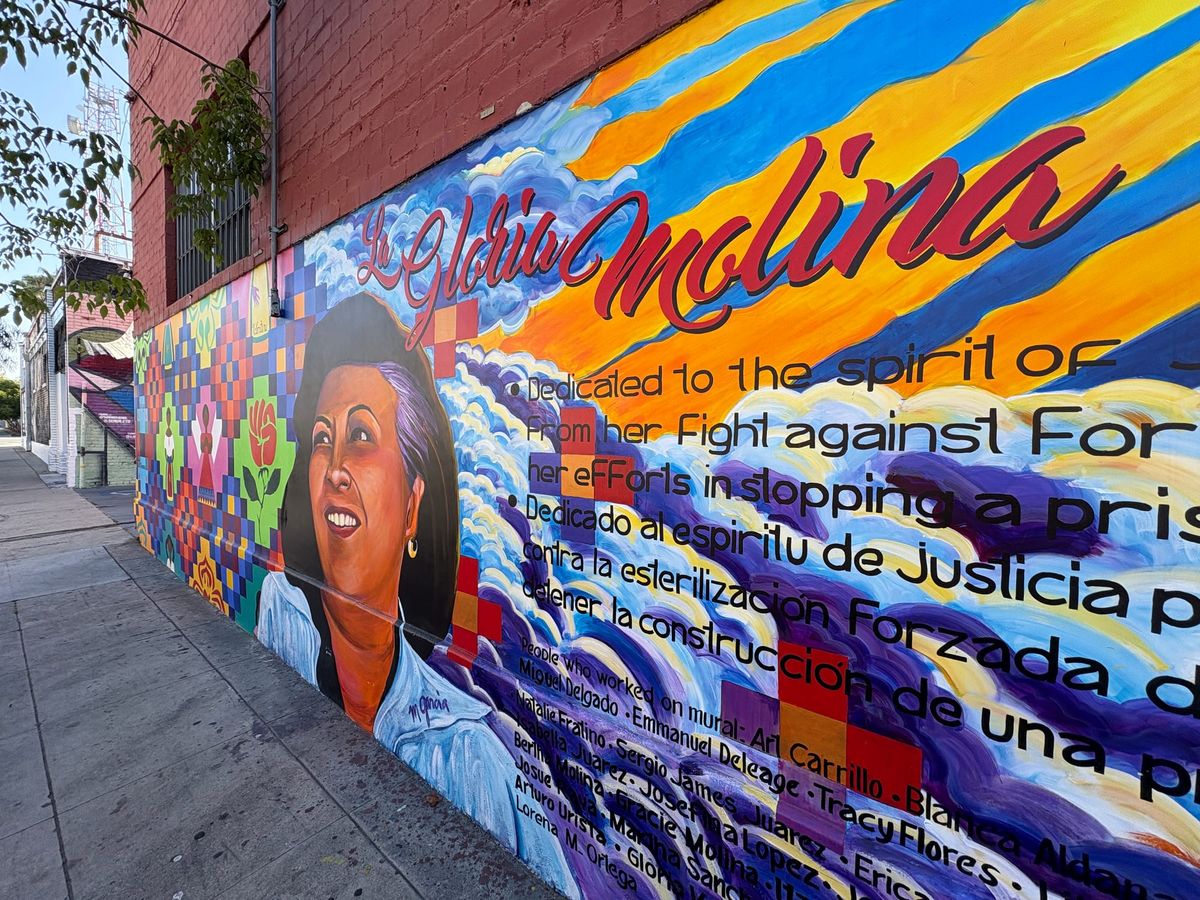
Nelson Grande
Grande, a former actor and activist who ran a small production company in the surrounding neighborhood until 2025, wants to see more police in the park, a solution echoed by other challengers to Hernandez. The problem, of course, is that the LAPD head count is below 9,000 officers, and boosting these numbers amid city deficits is no certainty. Hernandez, a Democratic Socialists of America-aligned councilmember, has consistently voted against increasing the budget for the LAPD.
Grande also wants to scrutinize the $27 million Hernandez says the city has put into her care programs. He said he supports the Hernandez-backed project to clean the water in MacArthur Park’s lake (trust me, it’s gross), but that such an upgrade misses the point: Residents avoid the park because it doesn’t feel safe.
Sylvia Robledo
Robledo, who was an aide to former City Councilmembers Jan Perry and Gil Cedillo, also wants to enforce 41.18 and crack down on drug dealers. She thinks Hernandez's plan to close Wilshire Boulevard to traffic through MacArthur Park is a bad idea and would use the money from the program to open an LAPD substation across the street from the park.
She also supports treatment options for the area’s homeless residents and emphasizes the need for basic upkeep – working lights and clean restrooms, for example – to make the place feel safe.
Mariel Garza
In large part, the challengers are tapping into the frustration and anger of nearby residents who are fed up with crime and open drug use in the park and surrounding streets and have lost patience with Hernandez's care-first approach.
I spent a few days last week working in MacArthur Park and saw firsthand some of the effects, both good and bad, of that strategy.
Discarded needle casings, trash and the leftovers of illegal fires littered the southern half of the park. Especially around the foul-smelling lake, it seemed as if the homelessness and fentanyl crises across the city’s 469 square miles were crashing down on MacArthur Park’s 35 acres, overwhelming the police and the outreach workers roaming on foot. A few children and their parents used the park’s sparsely populated, clean playgrounds – that was nice to see.
Immediately after I left Wednesday, the feds and the LAPD raided the area, arresting 18 people and seizing 40 pounds of fentanyl in an undertaking they called "Operation Free MacArthur Park." I returned two days later to see if MacArthur Park had been transformed, even if just temporarily, after the police blitz.
Jim Newton
It had not. Open drug use was still rampant. I found a nonresponsive man lying crumpled at the southeast entrance to the park and ran to a nearby mobile clinic and alerted the workers to a possible overdose. Their presence, and the overdose reversal drug naloxone, mean a life might have been saved, and that’s indisputably a good thing.
I don’t envy any leader who inherits a problem that has outlived so many L.A. political careers. But amid the constant media glare on MacArthur Park, it’s worth acknowledging that yes, fewer people are dying at the park, something the data clearly show but doesn’t often get acknowledged. And that isn’t enough to make the park something the public feels comfortable using.


