The sudden implosion of Rep. Eric Swalwell’s campaign over the weekend scrambled the California governor’s race just a few weeks before ballots are set to appear in mailboxes.
The race has been something of a mess for a while, with 10 prominent if unexciting candidates and not one with a commanding lead. In recent weeks, California Democratic Party leaders and powerful labor groups had begun coalescing around the Bay Area congressman, sensing he was best poised to break through in the June 2 primary.
But the sexual misconduct allegations reported Friday — first in the San Francisco Chronicle and then by CNN — led to immediate consequences (another recent example of how different the two parties are when it comes to tolerating bad behavior). Endorsements were quickly rescinded; former allies called on Swalwell to step down from the campaign and Congress. On Sunday night he exited the race, and on Monday said he would resign from Congress, though he still maintains his innocence.
It’s unclear whether Swalwell’s departure will help Democrats avoid getting shut out of the primary by the two leading Republicans — Steve Hilton and Chad Bianco — or just muddies things further. It may well depend on whether labor groups and other party leaders rally around one of the other high-polling Democrats, such as Katie Porter or Tom Steyer.

No billionaires tell us what to do, but it still costs money to do this work. So, please consider upgrading to a paid subscription and support independent, home-grown journalism.
But one thing is for sure: If Democrats want to ensure that the messy primary doesn’t ultimately hand over control of the state to the minority party in November, they need to move quickly to reverse a bad decision made by their legislative predecessors 15 years ago.
And no, I’m not talking about voting to put Proposition 14 on the 2010 primary ballot, ushering in the era of nonpartisan, top-two primaries that has so bedeviled the state’s Democratic establishment in this election. The mistake was approving last-minute companion legislation that included a ban on write-in candidates in general elections.
In so doing, legislators nixed a potential fail-safe that Democrats could use if the crowded field of their party’s candidates splits their vote and sends two GOP candidates to the general election. A long shot maybe, but hey, a write-in campaign worked for U.S. Sen. Lisa Murkowski in 2010 after she lost the Republican primary in Alaska.
Both Proposition 14 and Senate Bill 6, which spelled out how the ballot measure would be implemented if voters passed it in 2010, were part of hard-fought settlement between Democrats and Republicans to end a grueling months-long budget crisis. In their defense, legislators at the time may have not understood the implications of SB 6 or even known what it said. The bill was long, and it was written and passed in a single day – a practice that was outlawed seven years later with another ballot measure, Proposition 54.
 Mariel Garza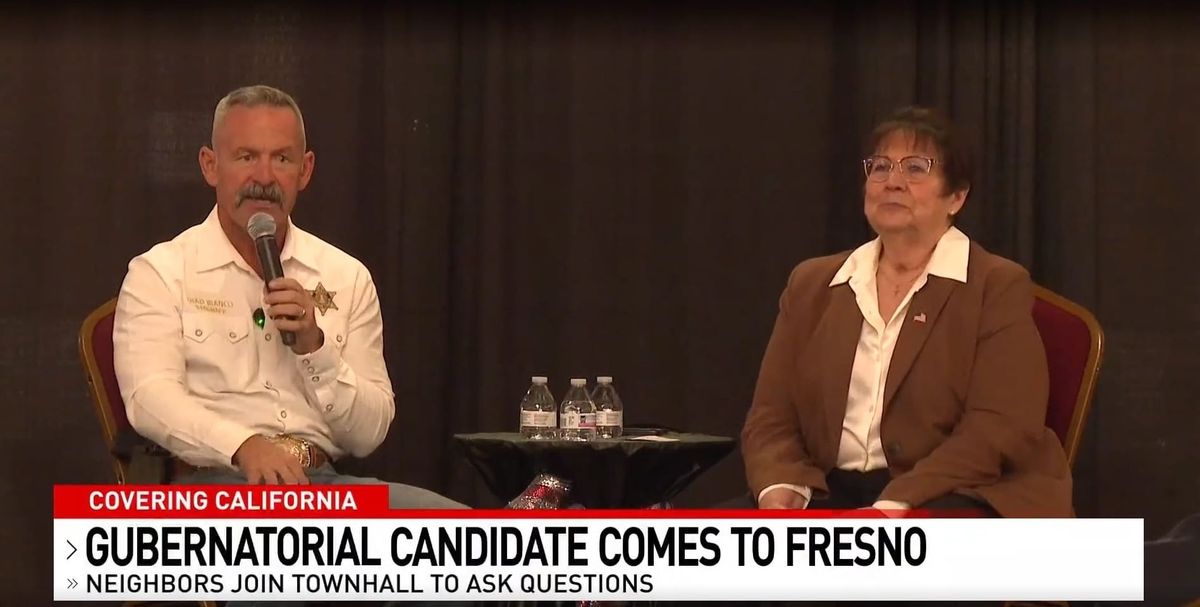
Or maybe its terms just didn’t seem like a big deal. It’s exceedingly rare for write-in candidates to win. And who could have foreseen the strange way in which the governor’s race would unfold 17 years later?
But it was an inherently undemocratic provision and maybe even unconstitutional. After Proposition 14 passed, opponents sued to stop it, arguing that it was unconstitutional for the state to limit candidates in the general election and not count write-in votes (which are still allowed in the primary).
One of the plaintiffs, Richard Winger, co-editor of Ballot Access News, told me that the U.S. Supreme Court has consistently recognized that all qualified voters have a constitutionally protected right to cast their ballots and have them counted. Nevertheless, a San Francisco superior court judge refused to block Proposition 14, and the legal challenge fizzled.
Paul Thornton
The Democratic Party never liked Proposition 14 and will likely use the prospect of getting shut out of the November governor’s race to try to overturn it. Indeed, Winger said a new lawsuit filed in November is challenging top-two primaries on behalf of minor political parties — Green, Libertarian, and Peace and Freedom — that have been excluded from the general election ballot.
I don’t know if there’s a path to fully repealing Proposition 14 outside of another statewide ballot measure, but there is a quick fix for this year’s predicament: The Democratic supermajority in the Legislature could pass a bill rescinding the provision banning write-in candidates that would go into effect immediately. It seems that restoring a constitutional right denied to voters for more than 15 years would meet the requirement needed to pass an urgency clause — that it is “necessary for immediate preservation of the public peace.” (Indeed, there’s already a placeholder bill ready for action.)
If the Democratic Party isn’t organized enough to come together on a candidate, its leaders in the Legislature should at least get it together to give themselves, and the state’s overwhelmingly liberal voters, a backup plan.
And they should do it before the June 2 primary. Voters may be less likely to get behind a write-in gubernatorial candidacy for, say, Kamala Harris if they perceive it is based on cynical self-interest rather than upholding democracy.
Jon Regardie Susan Brenneman
 Jim Newton