Here’s a frightening prospect for millions of people inhaling hazardous air from the fire that tore through the Lineage Logistics cold-storage warehouse in Boyle Heights last week: You might have to do this for a while.
The blaze that started Wednesday on the roof of a massive facility housing 85 million pounds of frozen food appeared to be nearly out Friday but flared up on Saturday, pushing clouds of black smoke across the region. Now the Los Angeles Fire Department says the warehouse could continue to burn for days, while assuring the public that the smoke hovering over much of the county doesn’t contain extraordinarily hazardous material.

Golden State is a reader-supported publication. No billionaires tell us what to do. Help us to stay independent with a tax-deductible donation.
But that’s just this warehouse fire. Starting on April 7, a suspected arson at the 1-million-square foot Kimberly-Clark distribution center in Ontario smoldered for a month. And while the logistics center housed mostly paper products, city officials warned people with respiratory conditions to avoid the area around the facility.
On June 11, another million-square-foot warehouse near the Central Valley city of Tracy erupted in flames. The facility, owned by Medline Industries, housed medical supplies, and San Joaquin County public health officials warned the smoke contained “respiratory irritants, toxic gases, carcinogens, and at least one neurotoxin.” They told locals to remain inside with windows closed.
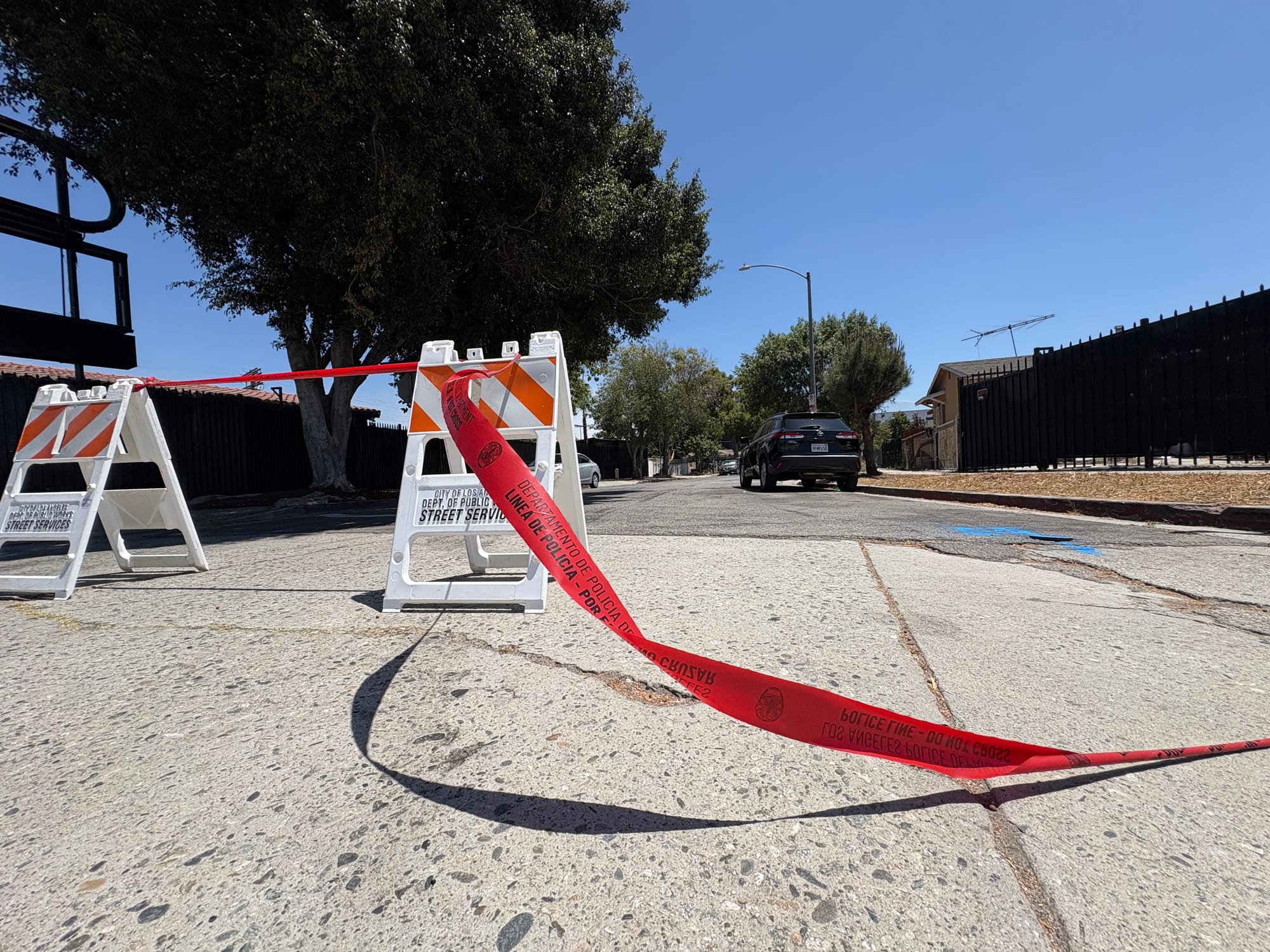
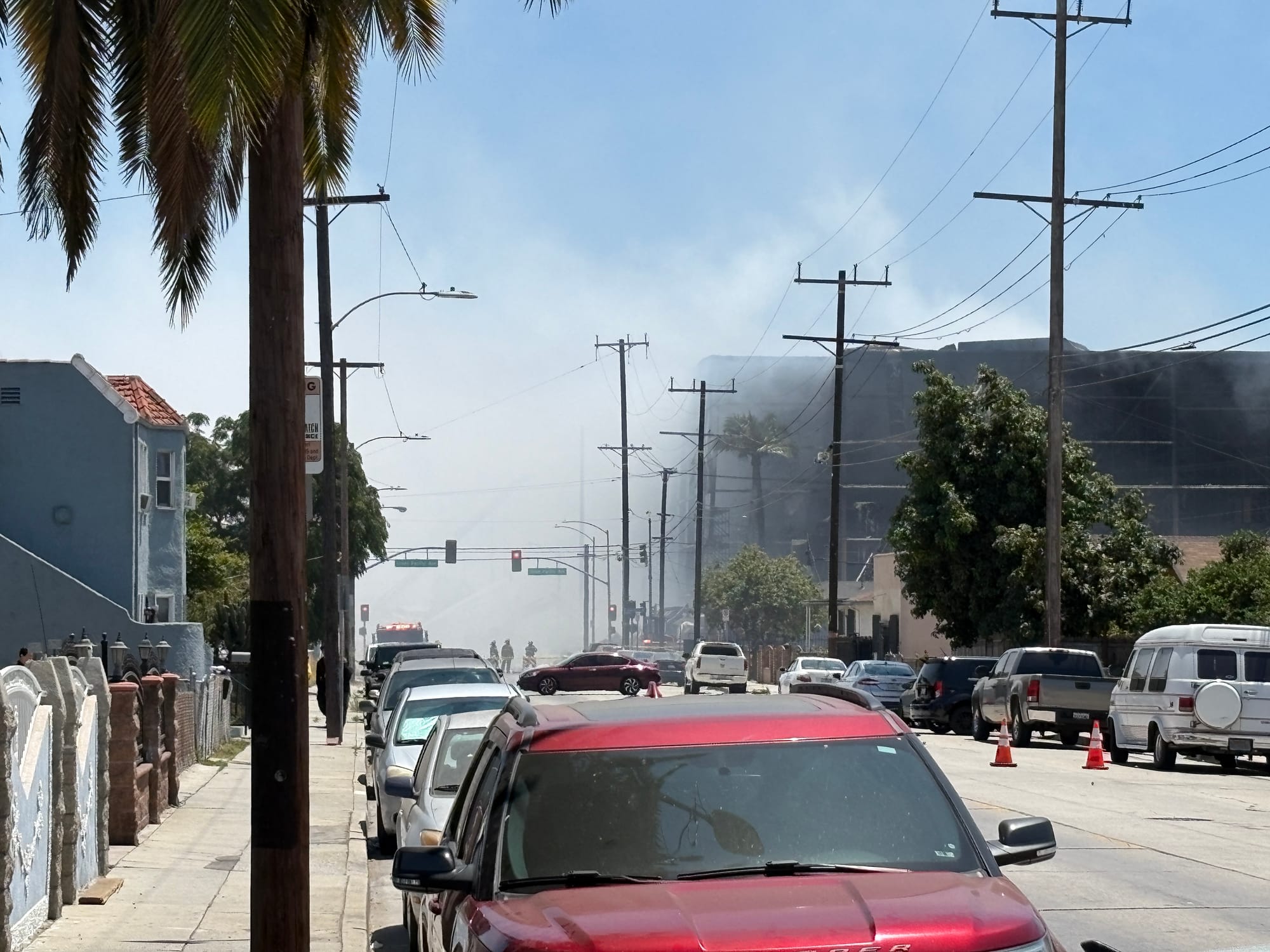
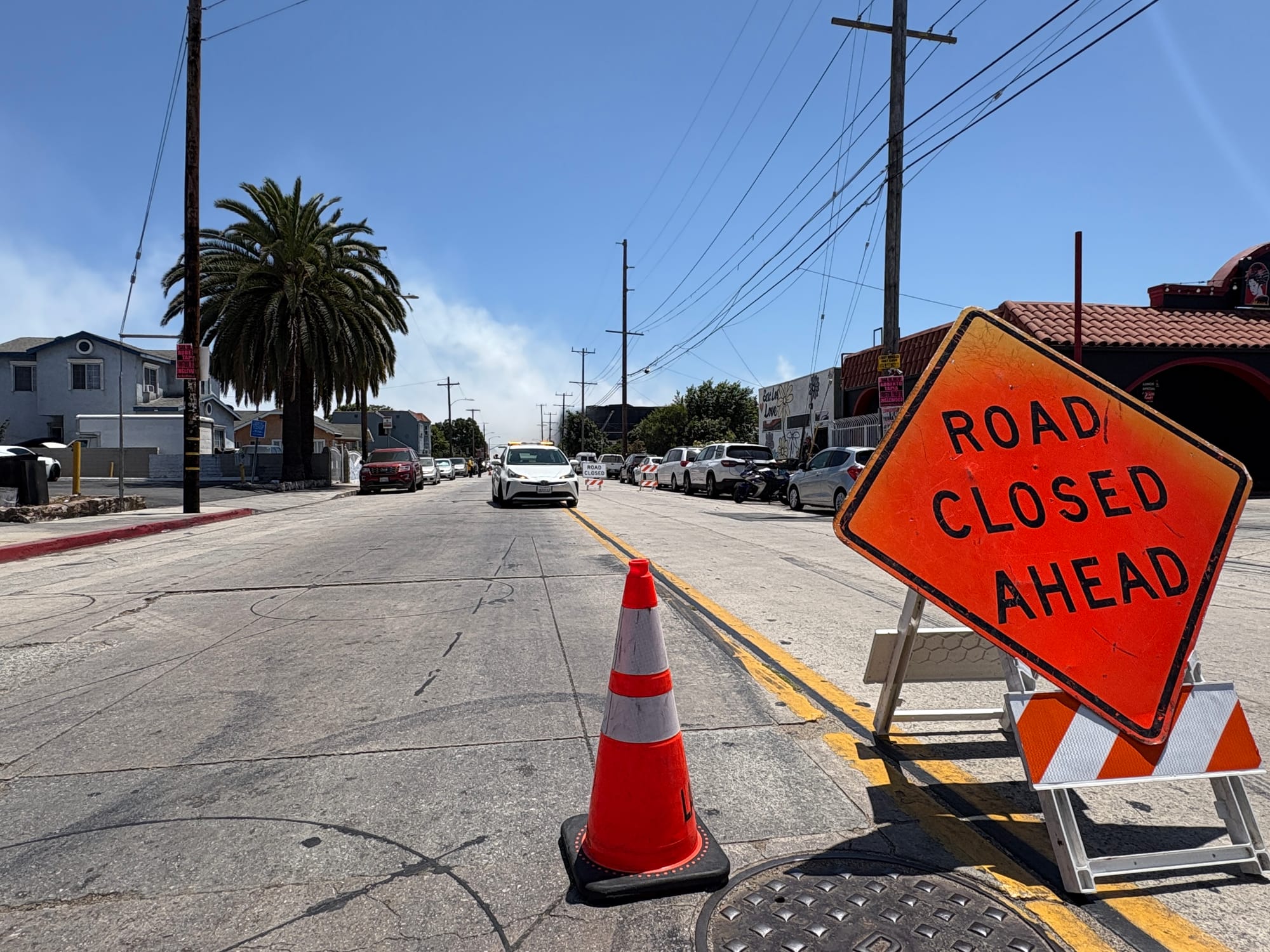
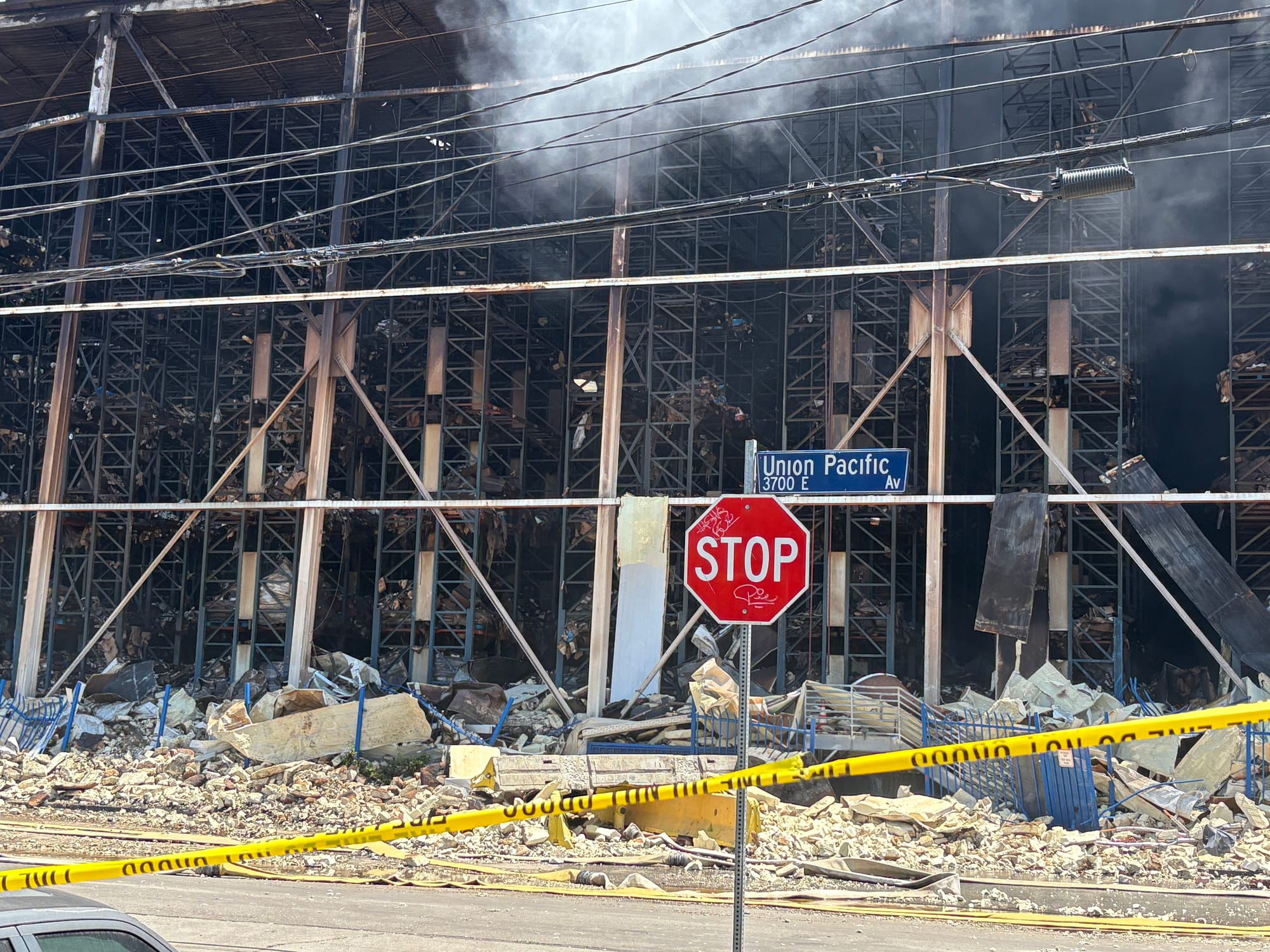
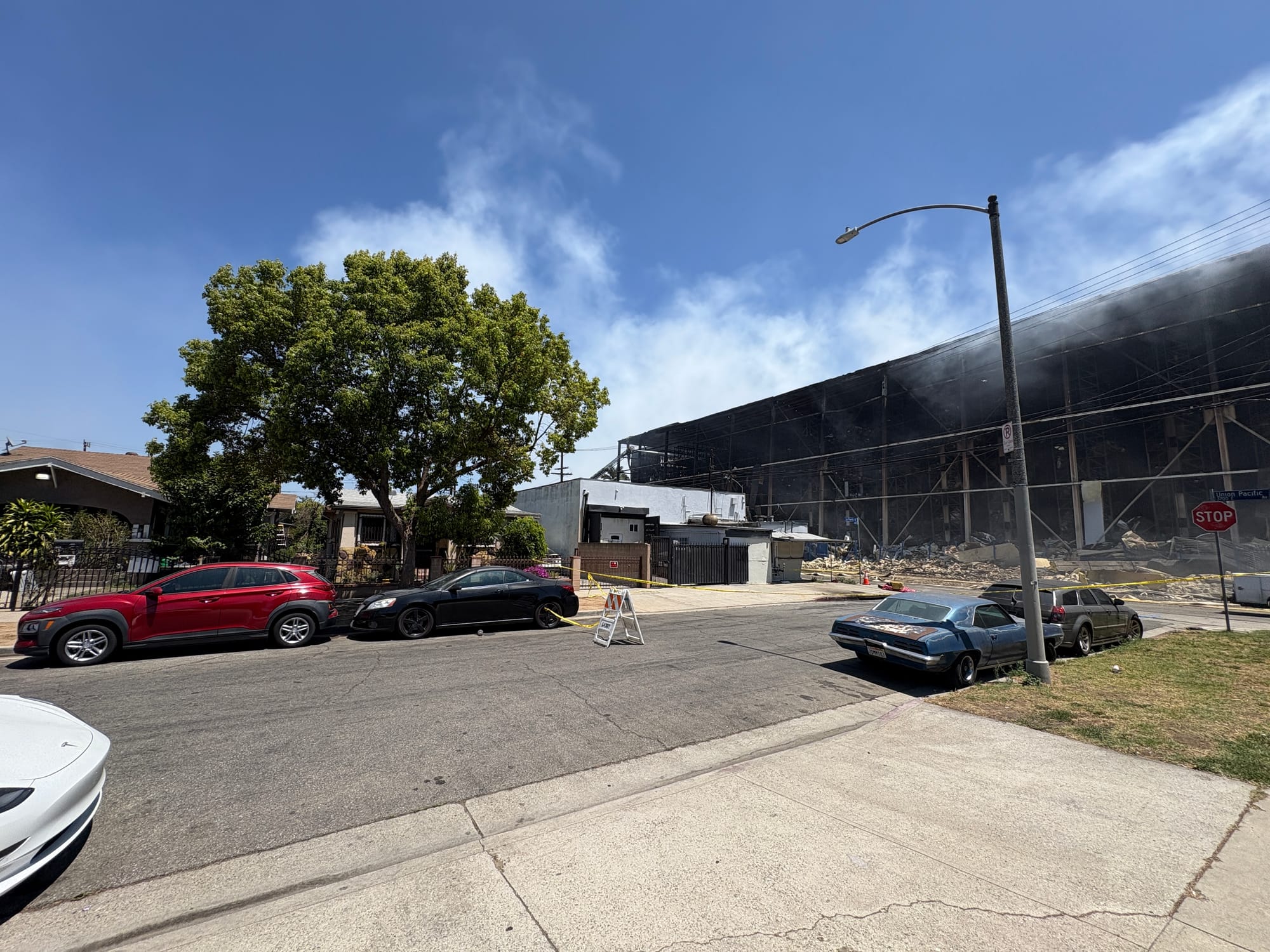
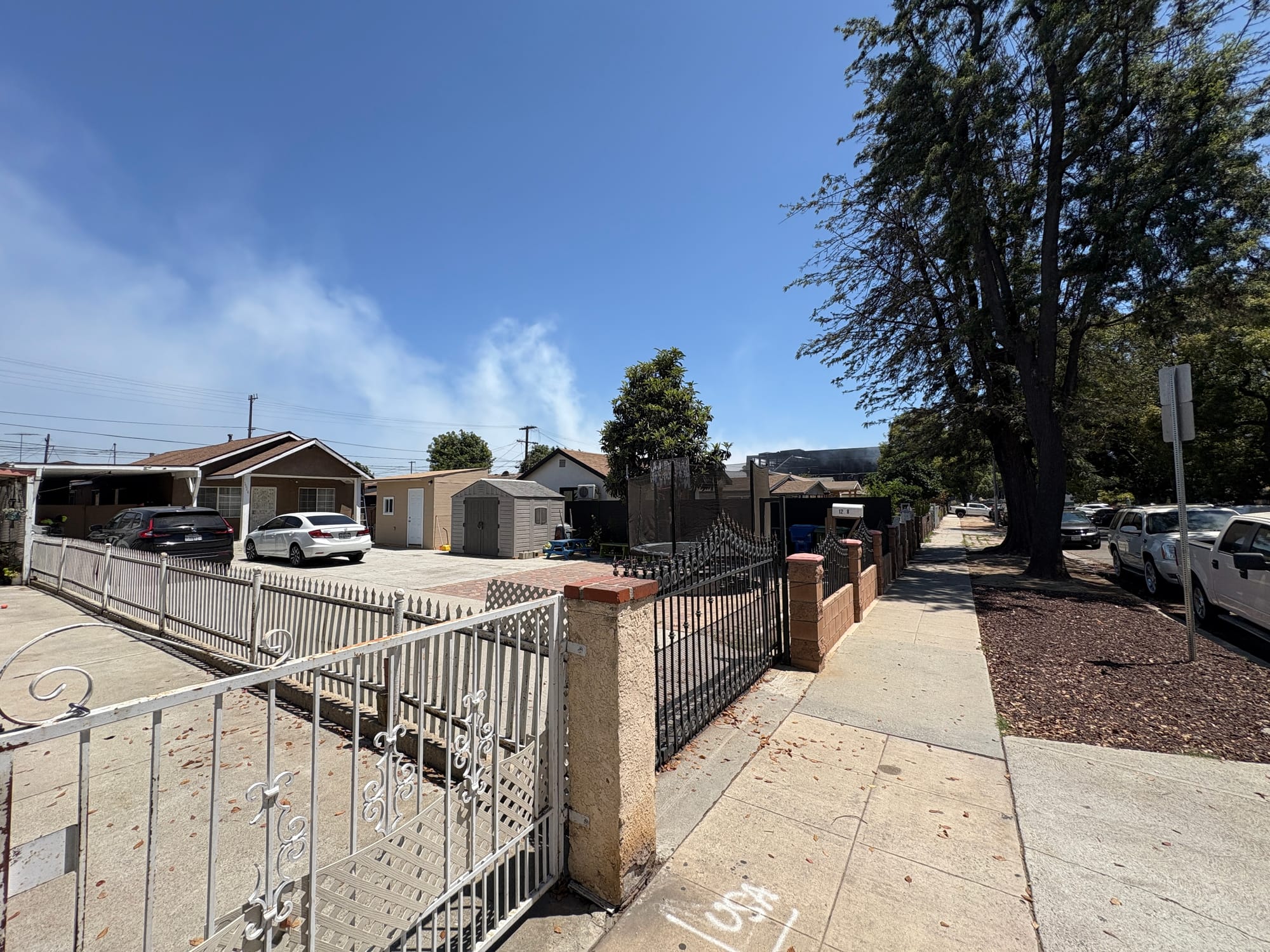
Photos taken June 22 show the proximity of Lineage Logistics' burning cold-storage warehouse to residential neighborhoods in East Los Angeles and Boyle Heights. (Credit: Paul Thornton)
This troubling trend raises serious questions about the safety of these facilities that are popping up around the state like mushrooms – and state regulators and lawmakers should demand answers on behalf of residents living in the shadow of these megafacilities: Do warehouses present extraordinary firefighting challenges? When these buildings catch fire, how long should people expect to inhale hazardous air that could make them sick? Are the facilities taking adequate steps to mitigate fire risk?
The record of massive warehouse burns isn’t extensive, but the pattern we’re seeing is worrying.
Anyone within breathing distance of the Boyle Heights fire should know that another Lineage cold-storage facility in southeastern Washington state caught fire in 2024 and smoldered for two months. Nearby residents in Benton County, along the Columbia River, reportedly suffered a number of health impacts, including emphysema, pneumonia, bronchitis and sinus infections.
 Mariel Garza
Megawarehouses have been proliferating in California, sold as a key to sustaining local economies and a vital source of employment in suburban and rural communities near freeways and rail lines with available open space. Riverside and San Bernardino counties alone host an estimated 1 billion square feet of warehouse space. Too often, these structures are built in low-income neighborhoods already living with the legacy of environmental injustice.
In many places, these facilities go up quickly, despite concerns about diesel exhaust from increased truck traffic and plain unsightliness. Now Californians deserve to know if fires at these businesses will also touch off months-long public health and environmental crises. It’s past time for state officials to investigate the odd pattern of warehouse fires and assess their dangers for the air we all breathe.
 Guest Contributors
 Jon Regardie