

Summer heat in L.A. County sends plenty of people to crowded beaches. For me, it means a pleasant escape to cooler, high-altitude air in the mountains.
That almost always involves a trip to federal land managed by the U.S. Forest Service. It’s practically unavoidable: The agency stewards about one-fifth of California’s total land area, including most of the Sierra Nevada. Among its charges is the Angeles National Forest, a mountainous expanse that makes up a quarter of Los Angeles County’s 4,000 square miles.

Golden State gives a special shoutout to Hannah MacLaren and every one of our recent donors. Join these heroes of fearless California journalism by making a tax-deductible donation today!
Federal management of the land has all sorts of implications for fighting wildfires, maintaining ecological health and managing watersheds. But for summer vacationers retreating to the mountains, it means the trees providing shade and the campgrounds providing accommodations are tended to by federal workers who, for lack of a better term, have been abused.
The alleged kidnapping last week of two scientists doing fieldwork for the agency in California’s far north has drawn the most attention. But in reality, it’s a frightening climax to a grim 18 months for Forest Service workers, whose numbers have dropped by nearly 6,000 since Trump started his second term – including 3,400 who were fired less than a month after the president took office.
The remaining 30,000 staff – the rangers, scientists, firefighters, maintenance workers, office staff and others stewarding nearly 200 million acres of federal land – will soon be hit by a planned agency-wide restructuring that will shutter dozens of research stations and upend the lives of employees forced to relocate. The Forest Service, headed for the first time in its history by a former lumber industry executive, insists this isn’t about weakening the agency’s research or land conservation.
 Oscar Garza
Whatever drives the agency’s decision-making, Forest Service employees have sounded the alarm – both through their largest union and in a whistleblower complaint – that the proposed changes will inflict much deeper job and research cuts than the Trump administration says. Based on my own experience, the frustration on the ground is also boiling over. Last September, one exasperated Forest Service employee hauling away litter at the Heaton Flats trailhead told me she was one of just four staff responsible for cleaning trash near Highway 39.
I was stunned. The road, roughly 20 miles of which snakes deep into the forest, is one of the primary access routes to the San Gabriel Mountains for millions of people in the L.A. basin. Notoriously, the stunning natural areas it serves – most notably the East Fork of the San Gabriel River – have a trash problem, something I always chalked up to the area’s proximity to the nation’s second-largest metro area.
But it’s also because, evidently, the Forest Service simply doesn’t pay enough people to clean up after visitors who won’t clean up after themselves.
So please, the next time you venture into the mountains to hike, bike or marvel at the beauty, say something nice to the Forest Service workers who protect and nourish these places. And for the love of God, pick up your trash.
Noted, With Comment
Pick up the white board: Journalist Robin Epley, who wrote the Sacramento Bee editorial board’s endorsement of former Rep. Katie Porter for governor, pleads with the Orange County Democrat to reconsider abandoning politics for (yes) the world of book influencing. “A BookTokker, Porter is not,” Epley writes. “She is a public servant, and she belongs in politics.”
Cool it: Extreme heat kills, and air conditioning saves lives in L.A. – full stop. Thankfully, L.A. County passed a law last year requiring landlords in unincorporated areas to cool their units, and the L.A. City Council is working on its own ordinance. But in the L.A. Times opinion section, climate activist Sara Yassi writes from London that we should look to places like India for “better answers,” such as cool roofs and public shade, than A/C mandates.
Another Bezos bleat: Look, it isn’t great that state legislators allowed a minimum-wage exemption for goat herders to expire, imperiling ranchers whose animals helpfully eat away bone-dry brush. But is it worth a critical editorial in an East Coast newspaper? The California-bashing editorial board at the Jeff Bezos-owned Washington Post thinks so.
L.A.’s new old problem: MacArthur Park has been a hotbed of crime and drug use for decades; Eunisses Hernandez, whose support for harm reduction and deemphasizing law enforcement deserves scrutiny, has been the area’s city councilmember for fewer than four years. But two opinion pieces in the California Post this week – including one by a commentator in San Francisco – put much of the blame for MacArthur Park’s sorry state on Hernandez.
Reader Responds
 Paul Thornton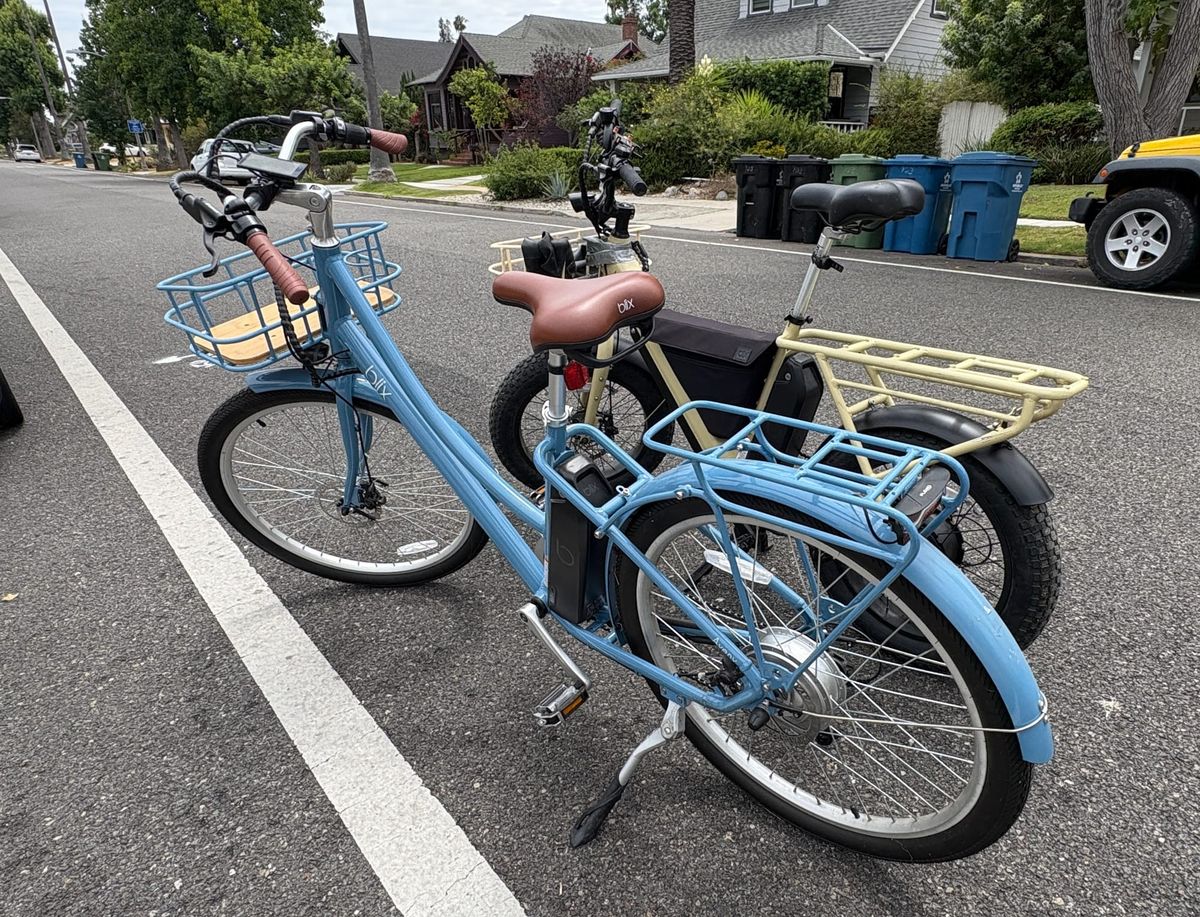
This article prompted the following letter from a reader.
It was refreshing to see a thoughtful discussion that recognized both the tremendous benefits of e-bikes and the importance of sensible safety measures.
I thought you might appreciate hearing from someone who represents a growing segment of the e-bike community. I'm 84 years old and recently purchased a Lectric XP Trike 2. In the first 10 days, I've ridden about 50 miles, and it has already become one of the most enjoyable and liberating purchases I've made in years.
For many older adults, an electric trike isn't a toy or a thrill machine. It's transportation, exercise, independence and a way to stay active outdoors while reducing the risk of falling that can come with riding a conventional bicycle.
As legislators consider new regulations, I'm wondering whether there will be distinctions made between two-wheeled e-bikes and three-wheeled electric trikes.
They have different handling characteristics, different stability and, in many cases, attract a different population of riders. It seems they may deserve to be considered separately rather than under one set of rules.
I also hope policymakers will remember that many responsible seniors rely on e-trikes to extend their mobility and quality of life. Regulations aimed at discouraging reckless riding by a small minority shouldn't unintentionally make it harder for older adults to enjoy the many benefits these vehicles provide.
– Raymond Hedrick, Bakersfield, Calif.


