

Hot Take
By Mariel Garza
I’m heading to the Trinity Alps later this month for some hiking into its remote 500,000-acre wilderness in the northwestern part of the state. I’ll be on alert for black bears, of course, but I’ll probably spend a good amount of time thinking about how I would feel encountering their much larger cousin, the California grizzly bear.
It’s not going to happen on this trip. Humans intentionally slaughtered the estimated 10,000 grizzlies living across the Golden State in the 1800s, from the coastal hills (Malibu bear bums!) to the high Sierra to the redwood forests. The last verified sighting of one was in 1924.

A special shout out to Mairead Reinhard, Andrew Farestveit, Ed Alston and every one of our recent donors. Join these heroes of fearless California journalism by making a tax-deductible gift today!
But that could change in my lifetime. A bill by state Sen. Laura Richardson (D-Inglewood), cosponsored by two Native American tribes, would start the process of bringing grizzly bears back home to California, and the Trinity Alps is one of the three areas experts say is a good spot for reintroduction, along with Los Padres backcountry near Santa Barbara and the southern Sierra Nevada.
I wrote a proper story about the proposal, and the fraught political context that may doom it this year, which you can read here.
 Mariel Garza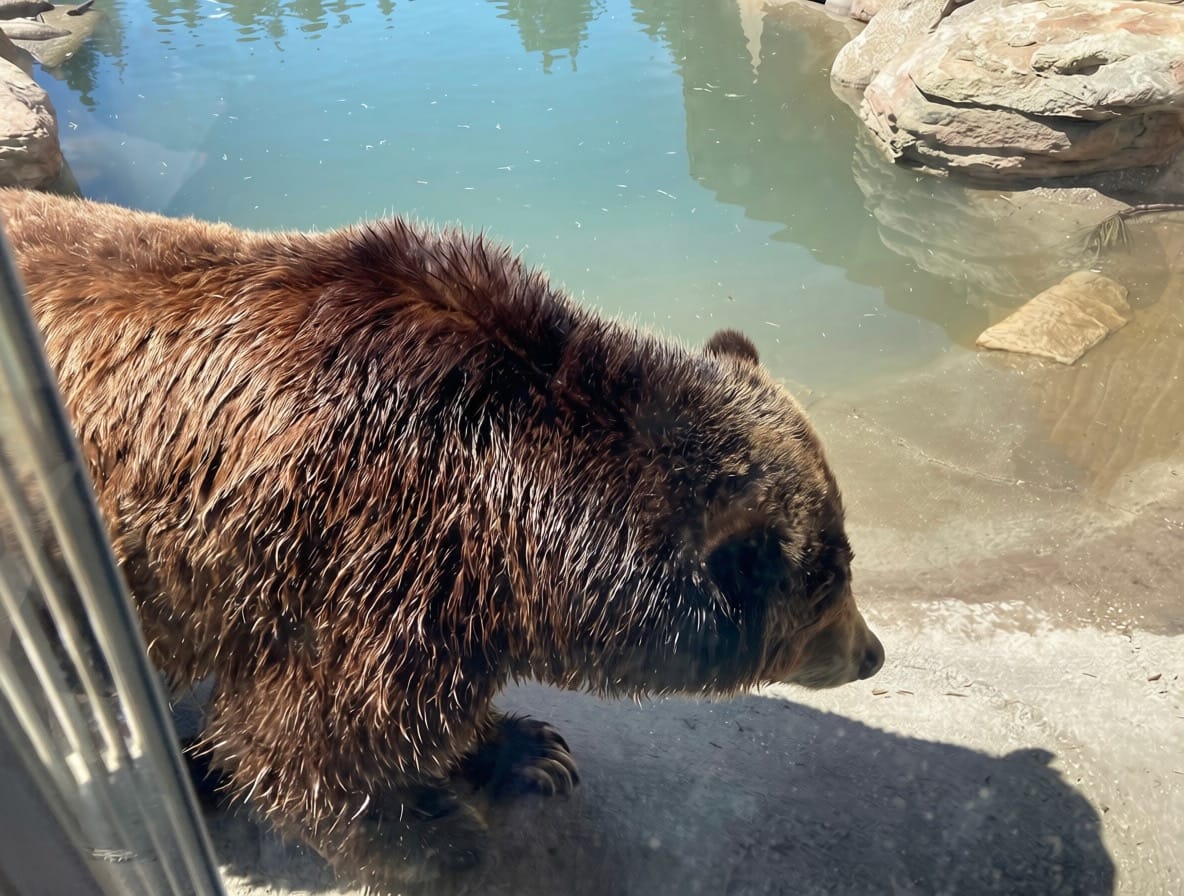
But what you won’t read there is how, in reporting this story, I found that my own skepticism about reintroducing Ursus arctos horribilis to California had changed.
In 2014, when I worked for the Sacramento Bee, I wrote a heavily reported column when the Center for Biological Diversity submitted a petition to the U.S. Fish and Wildlife Service to expand the grizzly recovery zone to include Yosemite National Park.
I thought it was a terrible idea. Just imagine mixing the crowds at Yosemite Valley with the shy but gigantic grizzly. A hiking buddy of mine said we might have to carry shotguns on future trips.
So when I heard about this new recovery effort, my old feelings resurfaced immediately. But then I read the California Grizzly Alliance’s 203-page feasibility study and talked to lead researcher Peter Alagona, an environmental studies professor at UC Santa Barbara.
 Karin Klein
I can’t really point to any one fact or argument that softened my position. Certainly I was surprised to learn from the study that cattle kill at least 10 times as many humans per year as brown, black and polar bears – combined. (Great, now I’m afraid of cows.) And that the odds of even getting hurt by one of the 100 to 200 grizzlies in Yellowstone National Park are 1 in 1.7 million for backcountry campers.
Yeah, there was that one hiker in Montana mauled to death by a grizzly in May when he surprised it on a trail at night, but that was the first fatal bear attack in Glacier National Park since 1998. Besides, I never hike alone or in the dark, two behaviors that increase the chance of a bear encounter.
Learning about the cruelty surrounding their extinction from California might have also activated my sense of injustice. The popular theory is that grizzlies died out in part due to habitat loss. Nope. According to Alagona, just a few people were responsible for wiping out these bears, and doing so in particularly horrible ways and often just for fun. Some of these people also massacred the state’s Indigenous people. (After tapping briefly into the facts and data Alagona gathered over years of research, I am eager to check out his upcoming book, “Start with a Bear: Humans, Grizzlies, and the Power of Stories on a Crowded Planet.”)
In any case, I won’t have to face my fears anytime soon. Even if this proposal passes this year, it would be years, if not decades before the first grizzly is chosen for homecoming.
Noted, With Comment
Billionaire dystopia: When it became clear the voters of Solano County would never approve “California Forever,” a new 400,000-resident city planned for the rural eastern edge of the Bay Area ruled by tech billionaires, the backers turned to a powerful ally. At The Nerd Reich, journalist Gil Duran says Gov. Gavin Newsom’s behind-the-scenes support for a project its neighbors don’t want “is not exactly a surprise” but might come back to bite him in the 2028 presidential race.
Midsummer reading: At the San Francisco-based Alta Journal, Elizabeth Casillas and Katie Hulse assemble an impressive list of 15 books about the American West coming out this month. Among the titles is a graphic novel, thrillers, true crime, poetry and an examination of how colonialism has shaped modern California.
Factchecking failure: The biggest surprise in the New Yorker Radio Hour interview of Los Angeles Councilmember Nithya Rahman was nothing that the mayoral candidate said. It was that the editor of the famously fact-checked periodical got something wrong. In the intro, David Remnick said that no incumbent L.A. mayor had lost reelection for a quarter century. Wrong. There was no incumbent in the 2001 race, which was ultimately won by James Hahn. Four years later, in 2005, Hahn lost his reelection bid to then-Councilmember Antonio Villaraigosa.
 Golden State staff
Back when he was a Brit: Consider the source (writer Garry South is a longtime Democratic political strategist), but this opinion piece in the San Francisco Chronicle takes an amusing look at Steve Hilton’s pre-California political career. South paints a not-so-flattering picture of Hilton’s time advising the British Conservative party before moving to California in 2012, gaining his U.S. citizenship in 2021 and running for governor as a Republican now. “This is not a serious man,” South writes.
Rusty who?: In a recent newsletter, we highlighted a column in the conservative California Globe on the effort to rename a stretch of Pacheco Pass in Santa Clara County the “Rusty Areias Highway.” Problem was, the obscure former California legislator was still very much alive and a powerful lobbyist in Sacramento. Now, Globe Editor Katy Grimes is back with a piece eviscerating the lobbyist’s allies for trying to get him confirmed to a plum 12-year post on the University of California Board of Regents.
A modest proposal for Manzanar: Building anything new in California – let alone massive immigrant detention centers that no one wants – is a challenge. Zócalo Public Square columnist Joe Mathews (satirically) suggests a solution that “honors our carceral history, utilizes existing public lands”: reopening California’s World War II incarceration camps.
Voter ID quagmire: L.A. Times columnist Anita Chabria uses her Kafkaesque ordeal helping an 18-year-old Californian obtain state ID to argue that Proposition 39 is about voter suppression, not election integrity. Chabria says this person is “one of thousands of Californians, born and raised in the Golden State, who lack official identification because it’s not as easy to obtain it as some want you to believe.”
Substack Shoutouts
A new housing stat: At L.A. Reported, journalist Jarrett Carpenter uses assessor data to tally the number of bedrooms added – not homes – to neighborhoods across Los Angeles County from 2015 to 2025. He finds that although the number of bedrooms grew at the glacial pace of 0.4% per year, much greater growth was concentrated in dense urban areas such as downtown Los Angeles, while single-family neighborhoods lagged behind.
Requiem for Spokane: The “last affordable city in the Intermountain West” will be a dramatically different place once it recovers from wildfires that destroyed more than 700 buildings, writes Bill Fulton, an urban planner and former Ventura mayor. At his Substack The Future of Now, Fulton – who has spent the last several months working in the city in eastern Washington – uses Paradise’s recovery after the deadly 2018 Camp fire to foreshadow Spokane’s pricier future.
Wild Art
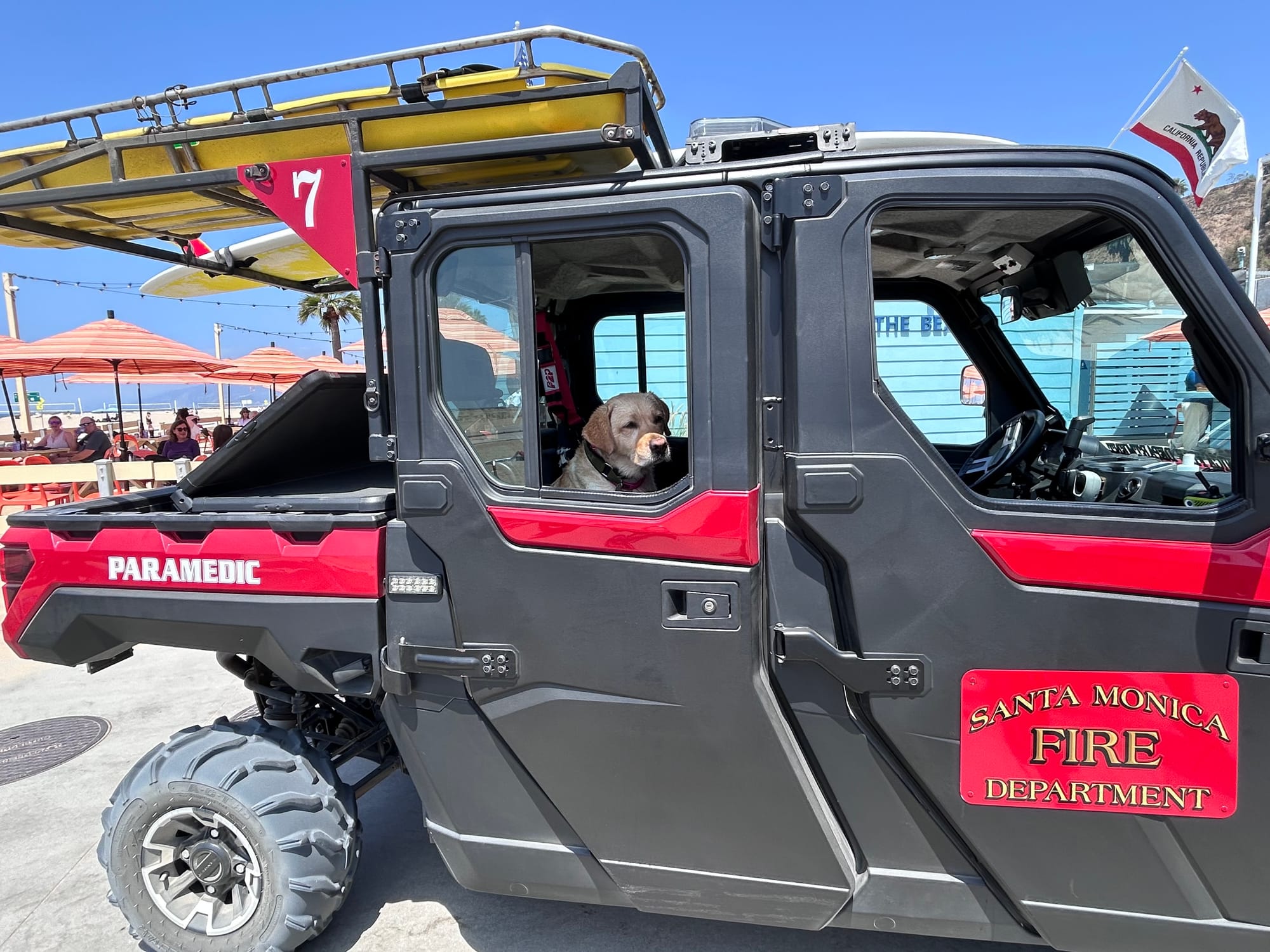
Have an original photo that you think would look great in this newsletter? Send it to forum@golden-state.org.


