

Hot Take
What happens after a voter drops their ballot in one of the 429 drop boxes across Los Angeles County or hands it to a poll worker at one of the voting centers? We all know the ballots are collected, sorted, opened, verified, collated and tabulated – but how, exactly?
Until recently, I wasn’t sure, though I’d heard election officials and experts explain the process more than once. To fill in the blanks, I joined a tour of Los Angeles County’s ballot processing center on Saturday organized by Zócalo Public Square.
I’m glad I did. The federal government’s last-minute attacks on California’s and L.A.’s mail-in ballots have so far been thwarted, but the Trump administration is quite clearly laying the groundwork to challenge the results. And once the claims of “election fraud” start heating up the internet, I will be armed with a better understanding of the thorough, transparent and secure procedures in place to ensure that mail ballots are properly counted.

Support our election coverage. Golden State's reporting and analysis on all 14 propositions on the Nov. 3 ballot is free to read, but not to produce. You can help us by making a tax-deductible gift. It's the smartest donation you can make this election cycle.
It begins with vans – sometimes even helicopters – delivering bags of mail ballots. Election workers pull out and sort the ballots into trays, which are sniffed by dogs trained to detect foreign substances (Rambo the black lab was on duty Saturday).
A strict chain of custody tracks ballots throughout the process in the 144,000-square foot center. These steps include a trip through a massive machine that validates the signature on the envelopes and additional human signature checks if necessary. It continues with a ballot-opening and checking process (county elections staffers told the group that sometimes voters send in greeting cards, nastygrams or other unrelated items in the ballot envelope) and finishes with final tabulation in the restricted access tallying room on Election Day.
On Nov. 3, the verified mail-in ballots will be counted along with in-person votes shortly after the polls close. How many ballots had arrived early enough to be verified will determine how long it takes to get results. (As of Tuesday, 246,438 L.A. County ballots had been returned, and 3.4 million ballots statewide.)
 Mariel Garza
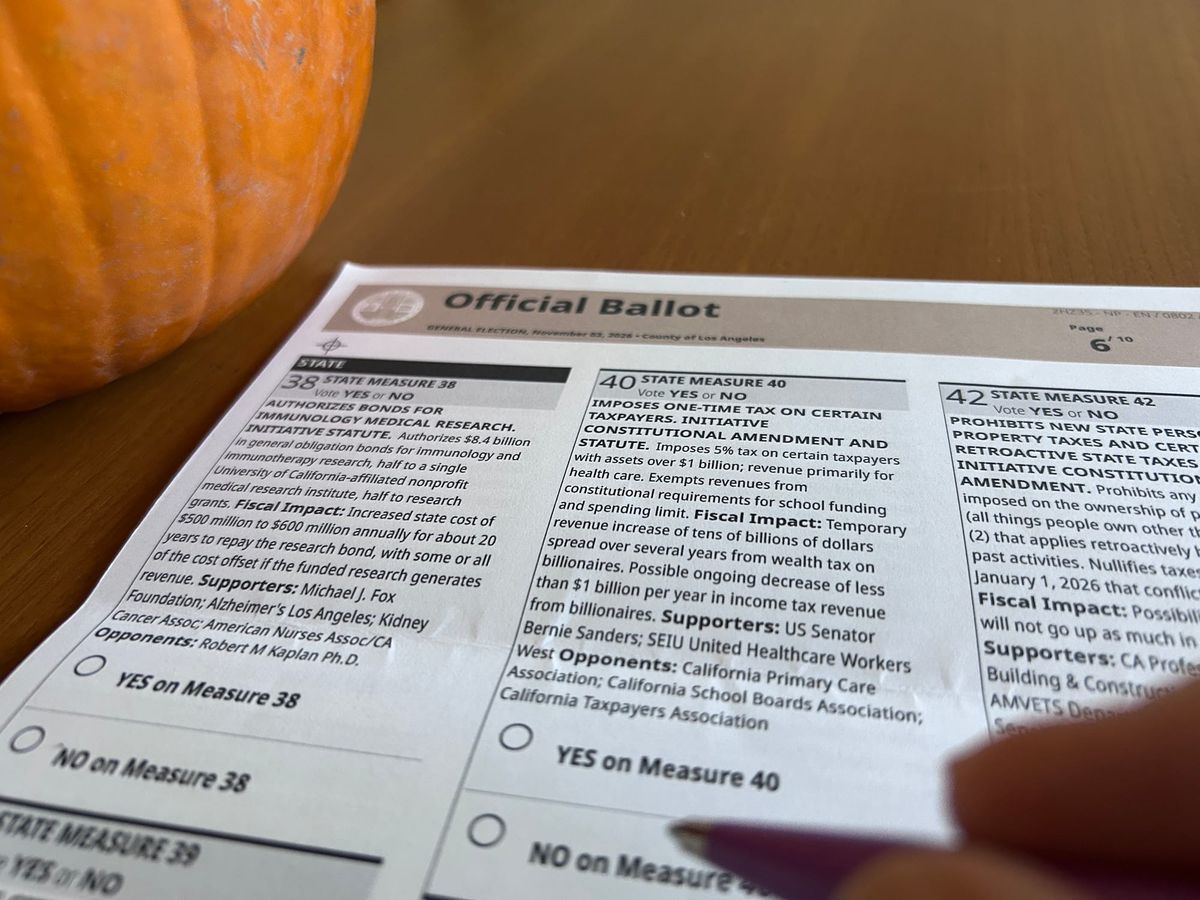
One thing I learned during Saturday’s tour was how in past elections I had unwittingly helped to slow down the county’s vote-tabulation process by turning in my mail ballot on Election Day. In the June primary, 82% of the 2.2 million votes in L.A. County were cast via mail-in ballot. About a quarter of those ballots were turned in on Election Day, meaning they had to undergo the same laborious, careful verification process that could have been completed in advance.
No wonder it takes days to get results. If I had voted in person or dropped off my ballot earlier, my vote would have been ready to be counted shortly after the polls closed.
I changed my ways this year and voted early — at a voting center, because I no longer trust the U.S. Postal Service. If enough of us do the same, we may not have to wait as long to know the outcome of this important election.
Still need to vote? Golden State is here to help!
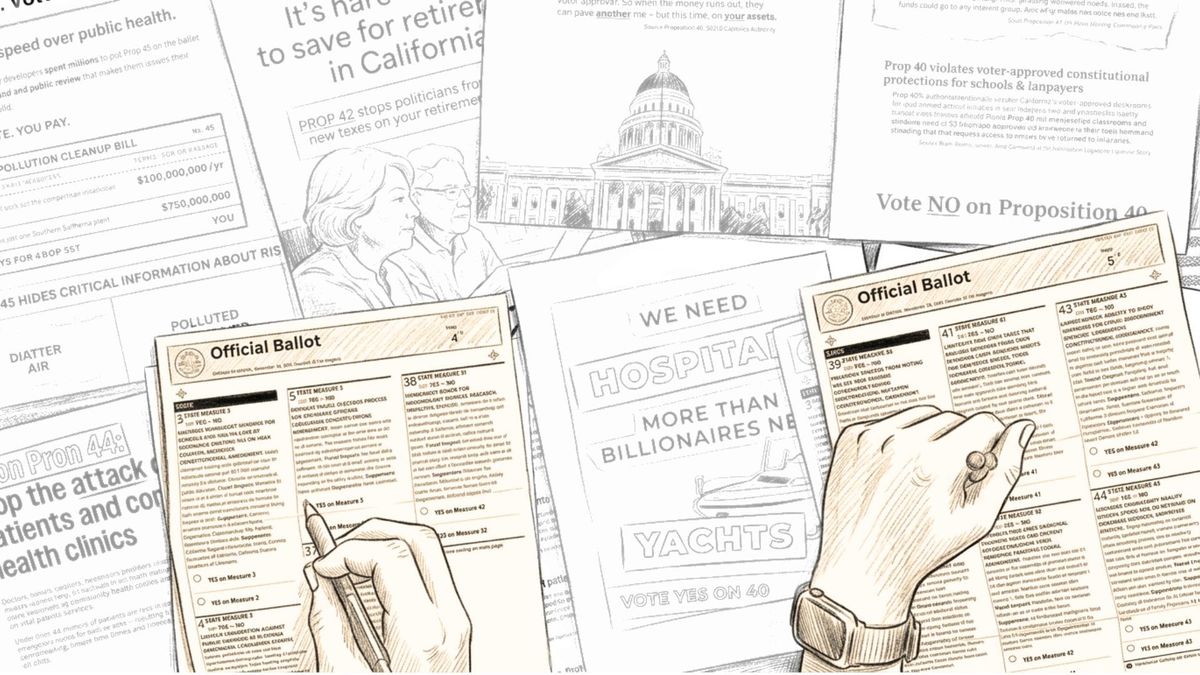
Long before most people even started thinking about the Nov. 3 election, the staff and contributors of Golden State were digging into the 14 propositions on the statewide ballot and some of the local measures in Los Angeles. We assembled our work in the pages below and tracked down helpful guides from other news outlets.
 Golden State staff
 Golden State staff
 Golden State staff

Noted, With Comment
By Paul Thornton
She's no socialist: But L.A. City Councilwoman is very much an opportunist, writes Harold Meyerson in the American Prospect. Meyerson, whose socialist bonafides go way back, casts the mayoral candidate as a "presentable Democrat" who can beat incumbent Karen Bass.
A home for Airbnb's money: The Olympics sponsor is pouring more than $7 million into city of Los Angeles races this election, the final local vote before the 2028 Games. At Torched.LA, Alissa Walker digs into expenditure filings to find the homesharing company’s preferred candidates for mayor (definitely not Raman) and City Council.
The dear leader’s opinion page: Katie Zacharia is back at home in Thousand Oaks after a five-day stint as White House press secretary, already getting an op-ed published in the California Post glorifying the stamina of the "greatest president." It’s certainly written for an audience of one, but here’s a link anyway.
Spooked billionaires: The New York Times peeks behind the curtain of the $333-million campaign waged by California billionaires to stop the Proposition 40 wealth tax. Among the more head-shaking details: a call for the state's super-rich to donate "a percentage of their net worth" to defeat a tax amounting to … a percentage of their net worth.
 Marisol Cantú and Jim Freeman
Substack Shoutouts
The other ICE crackdown: In L.A. Reported, journalist Kaila Yu notes that immigration arrests of Asian and Pacific Islander Californians increased tenfold in a year. The apprehensions often happen at routine immigration check-ins, out of the eye of a public that doesn't often associate ICE raids and arrests with Asian immigrants.
Prop. 45 and climate change: At Climate Colored Goggles, Sammy Roth says he might have considered voting yes on the ballot initiative to streamline environmental review for certain infrastructure projects if it was only about clean energy. "Alas, it's not," he writes. "It's a broad, sloppy attack on a foundational environmental law."
Memo Torres vs. LA Taco: The plucky Los Angeles newsroom fired its star reporter last week, alleging the termination was over misconduct and not a desire to pull back on ICE coverage. At his new Substack, Torres says the account by his former employer is BS.
What do you think? Golden State is a public forum. Send your responses for possible publication to forum@golden-state.org.


