

Deanne Stillman is a Los Angeles-based author whose books include "Blood Brothers," "Mustang," "Desert Reckoning" and "Twentynine Palms."
In case you haven’t heard, this year is Marilyn Monroe’s 100th birthday, and of course there’s been a release of Marilyn-related merchandise: a new champagne from Piper Heidseick; a new clothing line called “Lee X Marilyn Monroe,” based on her wardrobe from her last film, “The Misfits”; and most recently, from Mattel, “The Barbie Signature Marilyn Monroe Doll,” based on her look in “Gentleman Prefer Blondes.”
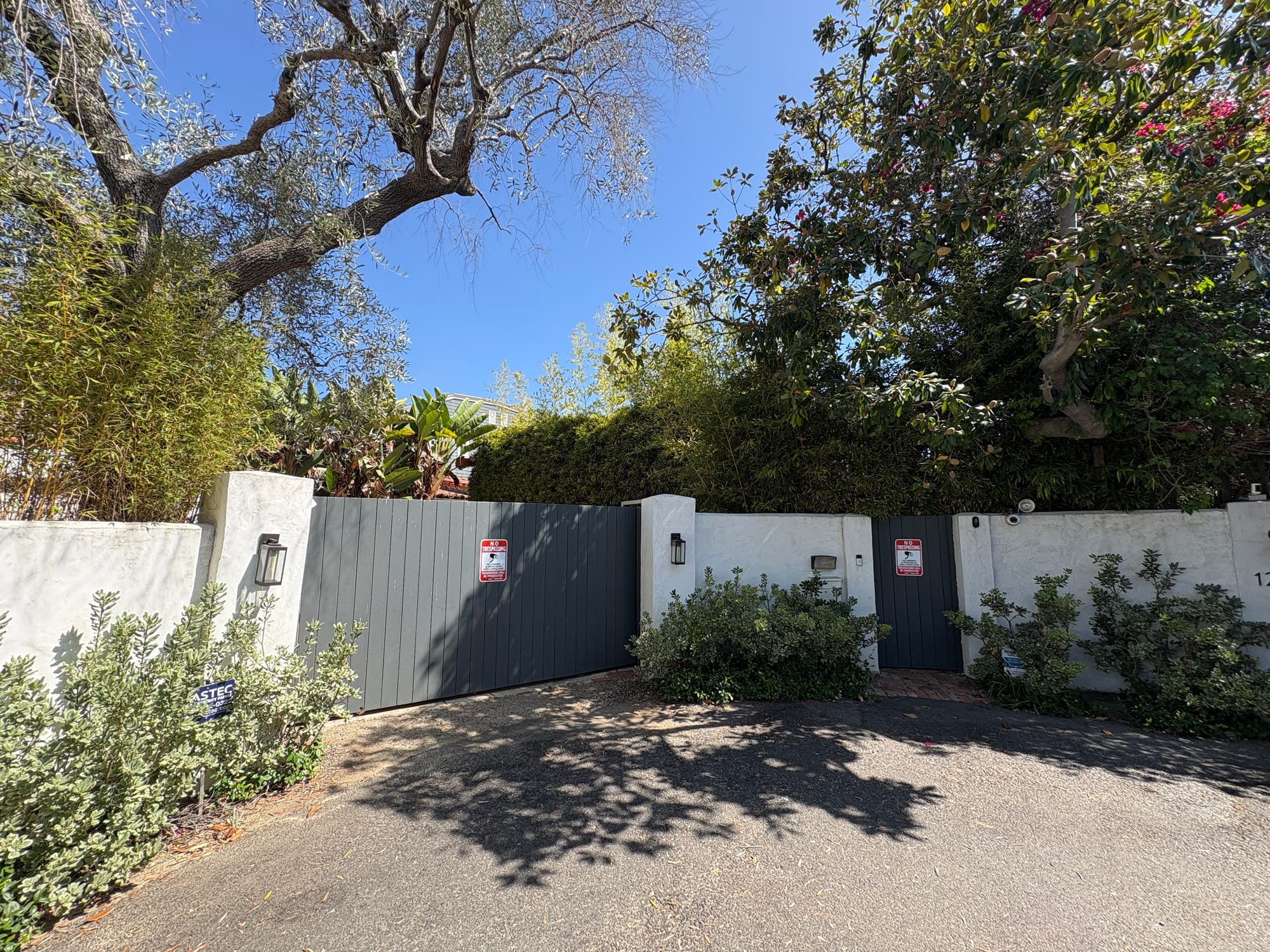
But the one commercial item that overshadows all things Marilyn is the Brentwood house where she lived and died – the subject of an ongoing real estate battle between its owners and the city of Los Angeles. The home, a stop on celebrity bus tours and an enduring cultural hot spot, has passed through 14 owners since her death in 1962, not counting the current ones. But that hasn’t diminished its status as a shrine – or the efforts to hawk relics or otherwise cash in.

Golden State is a member-supported publication. If you enjoy what you’re reading, please consider upgrading to a paid subscription and support independent, home-grown journalism.
The landmark’s wealthy next-door neighbors and owners, Brinah Milstein and Roy Bank – a reality TV producer who worked on "The Apprentice" – are seeking to tear it down so they can expand their adjacent property. This is contrary to an L.A. City Council declaration two years ago that the dwelling is a historic monument and should be preserved.
In a battle that went on for several years, the neighbors lost their case in May when U.S. District Judge Percy Anderson ruled that they “hadn’t shown the designation of the home as a monument amounted to a physical taking under the taking clause of the Fifth Amendment, which prohibits the government from taking private property for public use without paying just compensation.” The Pacific Legal Foundation, which often advances cases involving property rights, has appealed the decision.
In a city where history is often invisible, this abode stands out not only because Marilyn lived there, but it’s also where she died in 1962. In fact, a tile on the front porch says, “Cursum Perficio” – or, “My Journey Ends Here.”
More tile news: At an auction timed with her 100th birthday, a tile from her bathroom was offered. Actually, the house has been mined for years; a while ago, even the original gates were sold off.
In 1999, I covered the auction of the famous “Happy Birthday Mr. President” dress in which Marilyn serenaded President John F. Kennedy at Madison Square Garden in 1962 in a moment that has gone permanently viral. This is a dress that belongs at the Smithsonian, not Ripley’s Believe It Or Not! museum, which purchased it from a collector in 2016 for $4.8 million and where it now resides.
Indeed, Marilyn’s aura is so magnetic that people are shelling out large sums of money for an adjacent burial plot.
Hugh Hefner, who launched Playboy magazine in 1953 with a now very famous photo of the screen goddess, followed Marilyn into the beyond, having purchased the crypt next to hers in 1992 for $75,000.
“Spending eternity next to Marilyn is an opportunity too good to pass up,” he said upon purchase, and since 2017 he has rested there at the Westwood Village Memorial Park and Mortuary in Los Angeles, along with Truman Capote and Rodney Dangerfield – as in “I don’t get no respect” – perhaps giving the lie to his signature comedy routine.
 Golden State staff
The Hefner connection has itself become another category of value, with his and Marilyn’s possessions auctioned off together, as if they were a pair, as in Hefner’s dreams. The 2024 sale included a tube of her signature Elizabeth Arden lipstick along with an ensemble of Hef’s smoking jacket and pipe and his circular, custom-made bed.
When I first learned that Hef had arranged the bizarre forever hookup, I imagined that Marilyn had finally had it, and I found myself penning a monologue called “Marilyn Monroe Flees Her Crypt When Hugh Hefner Is Buried Next Door,” in which she escapes and heads into the nearby canyons and joins the mountain lions and other wild animals of Los Angeles, free at last. (It doesn’t hurt that there are cameras on the trail.) It’s now a short film made by an all-female crew, and it was my way of trying to halt the endless messing around with a venerated individual whose spirit yearned to escape the shackles of worship and control while she was alive.
Some time ago, I visited Marilyn’s crypt. Hef hadn’t died yet, and I don’t think my visit would have been the same had he been there, with the cemetery now rendered a kind of after-party without end, the only guest list restriction being whether you can afford it.
 Joel Bellman
I’ve hoped that my little film would shift the ethers somehow, causing one less tycoon to crowd her in the beyond. But another person purchased a neighboring crypt two years ago and will one day rest in the vicinity of America’s goddess everlasting, and perhaps he’ll assume status as Marilyn’s eternal plus-one after Hef. This is a well-to-do tech investor who, like Hefner,“always dreamt” of being next to Monroe. I won’t name him, but you can read it in this coverage – a pay-and-play move for pre-burial recognition and a post-burial backstage pass.
But actually, we all have one, and it’s free. For now, we can visit the house where she became immortal and watch her films forever. And we can hike the hills and canyons of Los Angeles, and imagine Marilyn right there with us, running wild and free.
What do you think? Golden State is a public forum. Send responses for possible publication to forum@golden-state.org.


