

Joe Mathews writes the Connecting California column for Zócalo Public Square and is founder-columnist of Democracy Local, a planetary publication. He is working on a book, One Law to Save the World, for the University of California Press. This column was written for Zócalo Public Square.
Wander around California, and watch the great civic purge in real time: Communities are stripping the names of supposed paragons from our parks, plazas, and schools. Cesar Chavez. Junipero Serra. John Muir.
This cycle of honoring and then dishonoring our heroes has become a depressing routine. We scour the past for unblemished virtue, only to crash into the inescapable truth captured by George Orwell: “Saints should always be judged guilty until they are proved innocent.”

It’s Golden State’s first birthday!
If you enjoy what you’re reading, please consider giving a gift to support a second year of independent, homegrown journalism.
So, let’s stop the exhausting charade. Since California’s heroes keep failing us, and we keep having to take their names off our street signs, we should start honoring our villains, antiheroes, and scoundrels instead.
Why celebrate the wicked? Because there is a profound, stabilizing value in acknowledging the evil. The pioneering sociologist Émile Durkheim argued in The Rules of Sociological Method that deviance and villainy are essential ingredients of a healthy society.
“Crime is normal because a society exempt from it is utterly impossible,” he famously wrote. Transgressions force jurisdictions to come together, define moral boundaries, and clarify their goals. Then, by applying our definitions of crime and singling out our villains, our communities drag our civic shadows into the light.
 Deanne Stillman
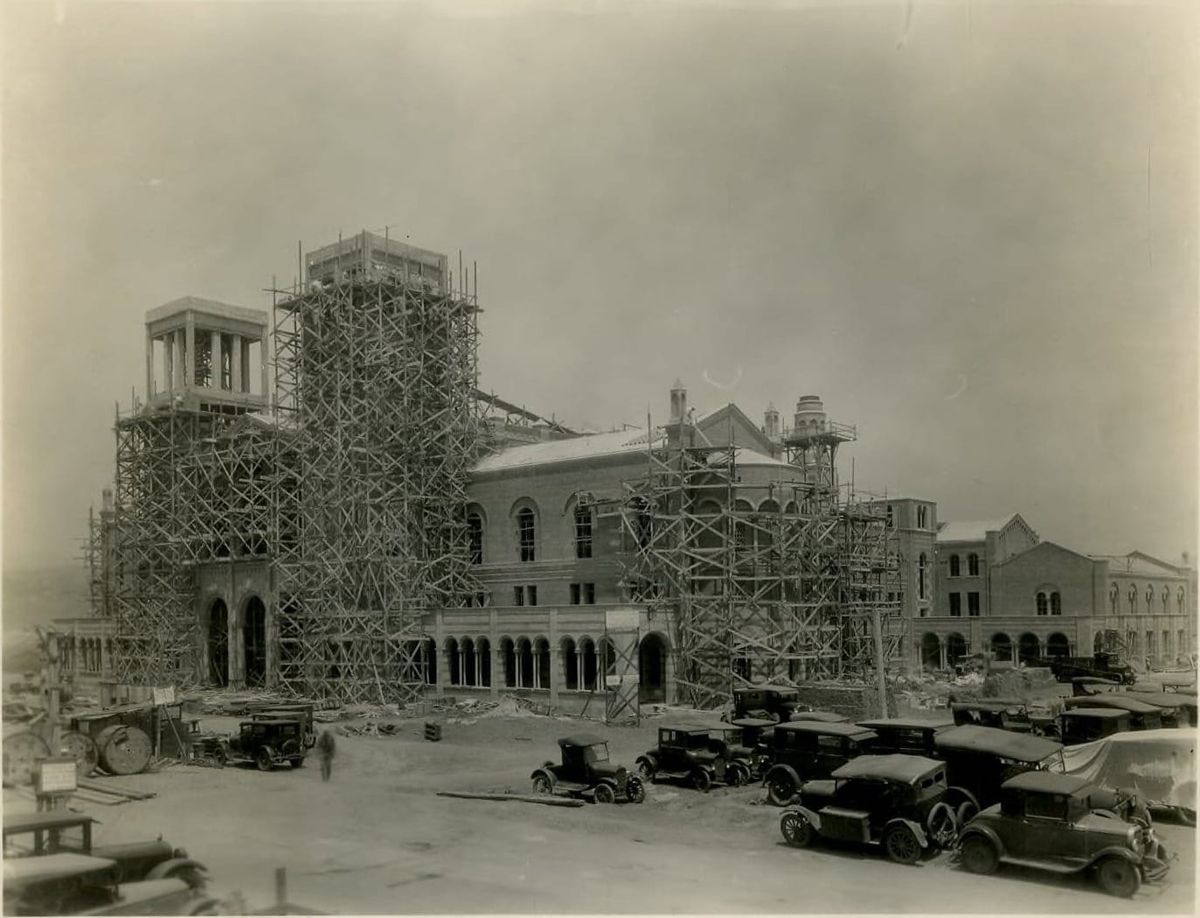
For Californians, the place to start this work is Sacramento, where the state Capitol is undergoing a massive renovation. Why name the shiny new annex for some distinguished politician, like Govs. Jerry or Pat Brown? It’d be more fitting to call the project, dogged by cost overruns and delays—the Arthur “Artie” Samish Annex.
The 300-pound Samish was a lobbyist who never finished school but understood political leverage. Representing liquor, brewing and gambling interests, he slipped cash to friendly politicians, and funded opponents of anyone who defied him. He famously posed for a magazine with a ventriloquist’s dummy (whom Samish called “Mr. Legislature”) on his lap.
The first law passed in Artie’s Annex should be one requiring public buildings to be named after similarly notorious figures. Such a law wouldn’t require too many changes. So many California things are already named after terrible people. Under this new law, we won’t need to rename Stanford University (railroad Robber Baron Leland Stanford), Mulholland Drive (William Mulholland, who stole Owens Valley water and caused the St. Francis Dam disaster) or the city of Fremont (John C. Frémont, the 19th-century explorer and senator responsible for the deaths of many California Indians).
To be sure, we shouldn’t limit honors to outsized evildoers. Let’s also appreciate our antiheroes. Like Clint Eastwood, who built a cinematic empire playing the most violent Northern California cop ever. Monterey County should rename itself after Eastwood, a longtime resident, and change its motto to Dirty Harry’s famous line: “Go Ahead, Make My Day.”
Similar antihero honors should accord to Tiburcio Vásquez, a bandit who viewed his criminal acts as righteous rebellion against the Anglo settlers marginalizing native Californios.
 Adam Henig
We could honor those whose crimes challenged corporate greed. Let us rededicate our financial districts to Black Bart, the Northern California robber who held up 28 Wells Fargo stagecoaches without firing a shot, leaving self-penned poems at the scenes.
And let us reserve a special plaque for those who were just messes. Take Juan Bautista Alvarado, the longest-serving governor of Mexican California. He lost California to the Americans, and he was famously too drunk to make it to his own wedding. The Alvarado name, which already appears on some California things, should grace every street full of bars.
In San Francisco, historical possibilities for honoring corruption and cruelty are almost limitless. City Hall should by all rights be named for Abe Ruef, the corrupt early 20th-century political boss who did a great job responding to the 1906 earthquake but was nevertheless convicted in subsequent graft trials and sent to San Quentin.
Speaking of which, that old prison should be renamed for Laura Fair (Fair State Prison!), a 19th-century San Francisco hotelier who shot and killed her married lover, State Sen. A.P. Crittenden, but was acquitted using an early version of the insanity defense and rejoined Bay Area society.
In Southern California, it’s well past time for the LAPD to name its glassy downtown headquarters after the murderer it let get away, O.J. Simpson. And if officials ever take Cesar Chavez’s moniker off that boulevard through East L.A., they should rename it for the most colorful Angeleno of all time, gangster Mickey Cohen — who mixed violence and racketeering with generosity to needy people and civic causes.
 Dan Morain

“I’m not an educated man, but I’ve read some history,” Sean Penn, playing Cohen, says in the film Gangster Squad. “Every kingdom comes up bloody. Every castle is built on a pile of bones.”
So, let’s stop searching for goodness or pristine saviors. Instead, let every building be a monument to human frailty, greed and gloriously brilliant crimes.

