

Hot Take
By Mariel Garza
To say I was surprised doesn’t convey the range of emotions I experienced after opening the Los Angeles Times e-edition on Sunday to see an editorial endorsement urging a “no” vote on Proposition 40, the billionaire tax.
First, I was confused. The newspaper hasn’t had an editorial writer, nor a functioning editorial board, for nearly 18 months. The most recent editorial was published on March 30, 2025.
A big thank-you to Stephen Commins, Diana Hembree and all of our recent donors. Join these heroes of independent, local journalism by making a tax-deductible contribution today!
The paper’s owner, biotech billionaire Patrick Soon-Shiong, had chased away all the people writing and editing editorials, including myself, by blocking an endorsement of Vice President Kamala Harris and later forbidding them to write negatively about President Trump. Today, the L.A. Times editorial board exists in name only. Its only two members are Soon-Shiong and Executive Editor Terry Tang, who is in charge of the entire news operation.
So, who wrote this? What process created it? I’ve asked around and still don’t know. However, I know what didn't happen. I heard from the Proposition 40 proponents that no one from the L.A. Times "editorial board" met with them, despite the campaign asking for a meeting to discuss the measure. (Hypocrisy alert: One of the many and often conflicting reasons Soon-Shiong gave for nixing a presidential endorsement in 2024 was that the board wasn’t able meet with Kamala Harris during her truncated 107-day campaign, even though it had met with her on numerous occasions before that. )
But I can guess based on my experience and that of former Opinion section colleagues. From time to time, Soon-Shiong would exercise his prerogative and send over op-ed articles – commentaries written by non-staffers – that he wanted the paper to publish. Sometimes, they fell apart in editing.
 Mariel Garza
Sunday’s Proposition 40 editorial fits the on-demand bill. It’s a minimal argument that reads like something drafted by a campaign comms contractor. There’s too little context, too little grappling with the arguments from the other side, a staple of editorial endorsements. In fact, it reminded me of that old restaurant review joke: The food was terrible, and the portions too small.
My confusion over the editorial quickly gave way to disgust. After a year and a half of immigration raids, Proposition 50 redistricting, Spencer Pratt’s mayoral run and a June 2 primary that all but decided the state’s next governor, this is the topic that moved The Times “editorial board” to end its silence? A simplistic plea to spare the state’s billionaires, including the one who owns the company, from a one-time 5% tax?
The question now is whether the L.A. Times will issue more Nov. 3 ballot recommendations and, if so, will it disclose who is responsible for reporting and writing them. I hope this was a one-off. Though I mourned the demise of the L.A. Times’ editorial board, I shudder at the idea of it becoming a shambling, undead version of itself.
 Elmira Muradkhanyan
Noted, With Comment
By Paul Thornton
Capitol traffic offense: In each of the last three years, more Angelenos have died in traffic – that is, in car crashes or getting hit as pedestrians or cyclists – than have been killed in homicides. As I wrote in June, this was the major public safety crisis you barely heard about in the primary race for Los Angeles mayor. And the situation isn’t improving: Hours before Sacramento’s Aug. 31 deadline to pass legislation, language was put into Senate Bill 194 effectively killing a long-planned project (which Mayor Karen Bass had already put on hold) to make major safety upgrades to Forest Lawn Drive in the San Fernando Valley. In an L.A. Times op-ed, Streets for All founder Michael Schneider encourages Gov. Gavin Newsom to veto the bill.
Journalism jolt: Ken Doctor, founder of the Pulitzer prize -winning news organization Lookout Santa Cruz, appeals to Newsom to sign Assembly Bill 2222, the Community NEWS Act, which would provide refundable tax credits to California’s media organizations, including Golden State, for employing journalists. The state has lost 70% of its daily journalism jobs over the last 20 years, and AB 2222 would act as the “tonic” against increasing online misinformation, Doctor writes.
Paving paradise: The pushback against President Trump’s attempt to allow more road construction, logging and mining in protected forests continues. In the San Luis Obispo Tribune, former Sequoia and Kings Canyon National Parks Superintendent Woody Smeck says the administration’s proposed repeal of the so-called roadless rule fragments wildlife habitat, increases fire risk and “permanently changes landscapes and diminishes the very qualities that make them worth protecting.”
 Josh Gohlke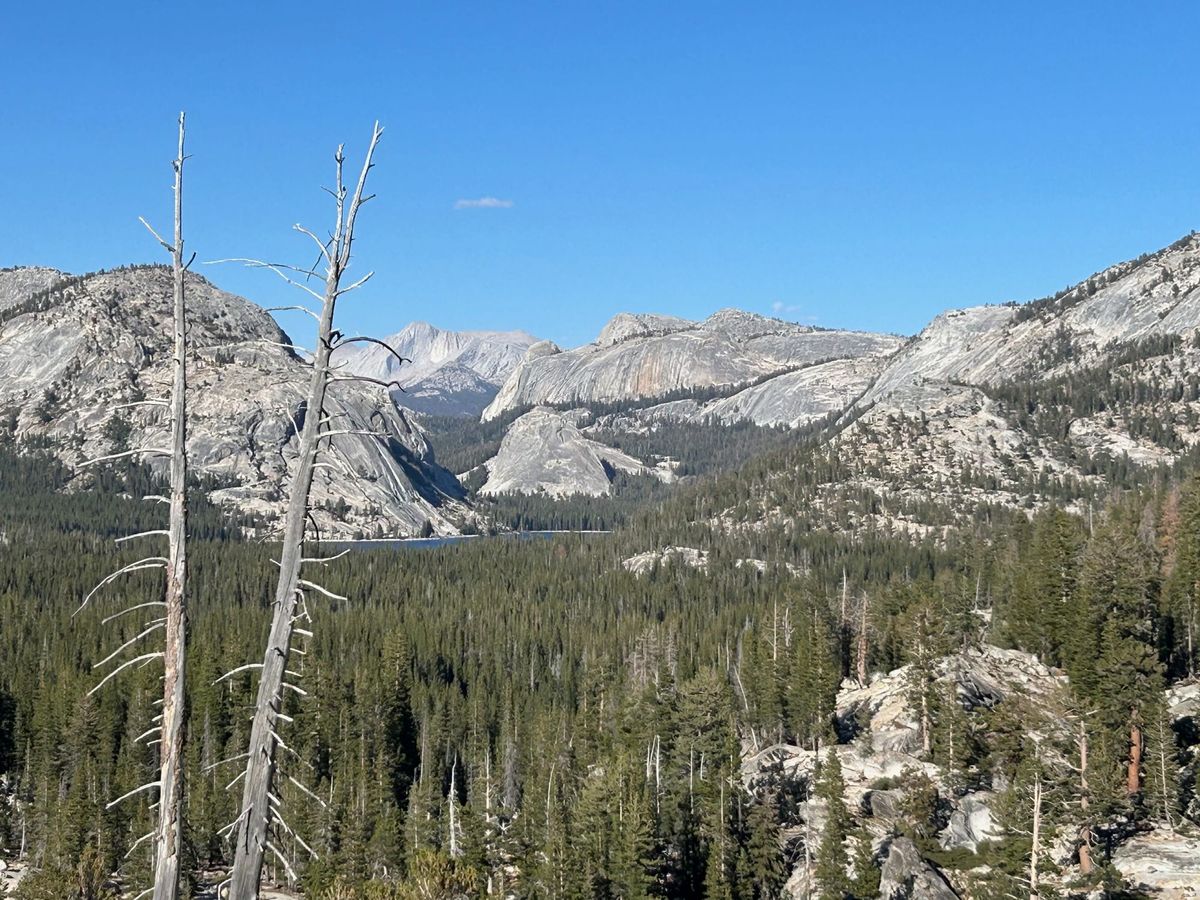
Requiem for a wildfire bill: Compromise legislation to speed insurance payouts to fire victims appeared on its way to the governor’s desk in late August. But the deal fell apart amid opposition from the state’s three biggest investor-owned utilities, and Assembly Speaker Robert Rivas (D-Salinas) didn’t even bring the bill up for a vote before the session ended. L.A. Times columnist George Skelton writes: “I’m in my seventh decade of covering California governors and legislatures and never have seen — or heard of — anything like this: a legislative leader backing out of a deal agreed to with the governor and the other house’s leader.”
Maverick, or not: How does an English conservative political strategist who once embraced environmentalism go on to be the Trump-favored Republican candidate for governor of California? In the New York Times, British journalist Samuel Earle writes that whatever public face Steve Hilton happens to be wearing – in California, it’s the kinder, accented version of MAGA – beneath it is an unserious politician in a “norm-shattering quest to dismantle the state as quickly as possible, with no heed for consequences.”
The climate candidate: Sammy Roth, proprietor of the excellent newsletter Climate Colored Goggles, listened to incumbent Karen Bass and Councilmember Nithya Raman make their environmental pitches at an L.A. mayoral forum last week. He faults Bass for expressing an “outdated worldview where climate solutions are primarily cost burdens, rather than opportunities for cost savings,” and says Raman is the “easy choice” for climate voters.
 Deanne Stillman
Data center dreamin': Maybe there’s finally some backlash to the backlash. In the San Diego Union Tribune, Corey Gustafson, a former San Diego County Republican Party chairman, says the knee-jerk opposition to data centers costs us jobs and tax revenue. In a CalMatters opinion piece, Allison Agsten, director of the USC Annenberg Center for Climate Journalism and Communication, says more transparency in local planning could help soften communities’ opposition to data centers.
What do you think? Golden State is a public forum. Send your responses for possible publication to forum@golden-state.org. And sign up for free to make sure you don’t miss anything.


