Listen to a conversation between Paul Thornton and Ann Carlson.
A book on L.A.’s fight against smog might just be what we need now as the Trump administration strips away the environmental regulations needed to fight climate change.
Yes, the region still has major pollution problems, a fact that UCLA law professor Ann Carlson doesn’t hide in her upcoming book, “Smog and Sunshine: The Surprising Story of How Los Angeles Cleaned Up Its Air.“ But it’s a lot better now, and the digs against Los Angeles’ unbreathable air are long outdated, as anyone who’s lived here for many decades (like me) can tell you.
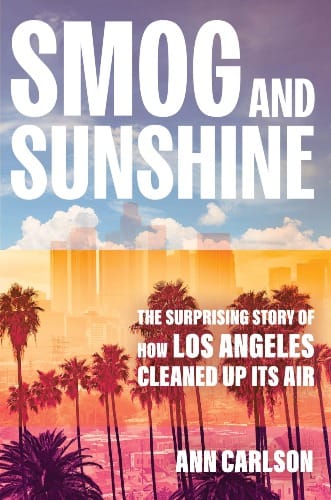
Carlson’s greatest service isn’t correcting the slander. Rather, it’s cataloging the scientists, activists and fierce regulators who over many decades and setbacks stood up to the industries whose products were poisoning Angelenos. Her book is a call to action for people waging a similar battle against climate polluters today.
Carlson, an Orange County native who served as President Biden’s acting head of the National Highway Traffic Safety Administration, vividly describes the L.A. of the mid-20th century as a city choked in ugly fumes. The emissions were so unrestrained, that Los Angeles exceeded the state’s carbon monoxide limit every single day in 1964.
Though the air in the L.A. basin still violates federal standards on ozone – a particularly vexatious smog pollutant – “the most heavily polluted day in 2024 [was] seven times cleaner than the worst day in 1970,” Carlson writes.

Golden State is a member-supported publication. No billionaires tell us what to do. If you enjoy what you're reading, please consider upgrading to a paid subscription and support independent, home-grown journalism.
It’s a familiar contrast for anyone who remembers Los Angeles before 1990. When I was a kid growing up in Glendale in the 1980s, my school would cancel outdoor recess on “Smog Alert” days. Today, my children don’t even know what a Smog Alert is.
But Carlson’s book isn’t just a before-and-after comparison, compelling as that is. She fills in the details, such as L.A.’s failed early attempts at reducing air pollution that targeted sources besides cars (spawned by a Los Angeles Times campaign in the 1940s) and the grass-roots activists fed up with their neighborhoods being used as pollution dumping grounds. She credits the Mothers of East Los Angeles – whose leader, Juana Gutierrez, died last year – and other local groups for shaming politicians into action and establishing a broader public awareness of environmental injustice.
Of course, this story has its villains. The auto industry denied for years that cars were the main source of L.A.’s smog despite overwhelming evidence to the contrary. Its tactic for opposing the regulations that would eventually make Southern California’s air less toxic – “deny, delay, deception,” as Carlson calls it – sounds painfully relevant today when comparing it to the oil industry’s effort to undermine climate action.
 Mariel Garza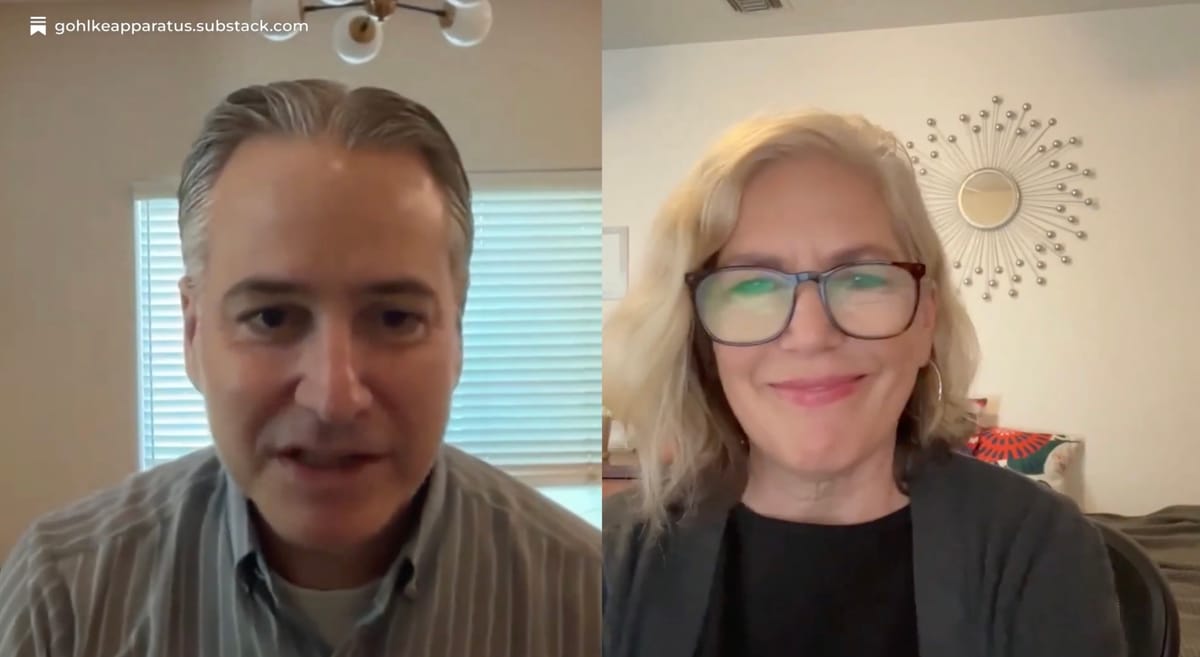
But if industry can dust off an old playbook for attacking research and regulation, so too can environmentalists to attack climate change. As Carlson explains, that blueprint was written by the activists, scientists and regulators who successfully fought the industry and government bureaucracy to create laws that would eventually clean the air in Southern California.
“We just have to continue to … put public pressure on our politicians,” Carlson told me in an interview. “That was an extraordinarily important part of the story of air pollution. We need to keep that up for climate change.”
If we succeed in mitigating the worst effects of climate change, “Smog and Sunshine” shows how L.A.’s fight against air pollution laid the groundwork.
Listen to the author speak about her book in the Golden State Podcast this week.
 Darrell Kunitomi
 Paul Thornton