

When ballots land in the mailboxes of city of Los Angeles residents next month, voters will see something unique at the top: a mayoral reelection bid with actual choice. Incumbent Karen Bass faces a something-for-everyone field of competitors, ranging from City Councilmember Nithya Raman to businessman-turned-philanthropist Adam Miller to ultra-progressive Rae Huang to Republican reality TV personality Spencer Pratt.
It’s been more than 20 years since a Los Angeles mayor’s quest for a second term was this competitive, and that’s just one aspect of what makes the June 2 primary election stand out. In all three citywide contests (including city attorney and city controller), incumbents face legitimate challengers. At least five council races, from Eagle Rock to Venice Beach, offer a degree of uncertainty in the outcome.
The net result is that from the top of the ballot to the bottom, nothing is preordained, and the phrase “get out the vote” is less political cliche than electoral mission: 2026 has become the golden age of voter choice.
This makes life difficult for almost everyone running for office, and contested elections likely mean candidates, and the special interests who support them, will resort to sending nasty mailers and torching opponents on social media (it’s already happening). While some of the attacks will be distasteful, in the end Angelenos will benefit, because competition forces incumbents to defend their record.

Golden State is a member-supported publication. No billionaires tell us what to do. If you enjoy what you're reading, please consider upgrading to a paid subscription and support independent, home-grown journalism.
Bass, City Attorney Hydee Feldstein Soto, Controller Kenneth Mejia and the three incumbent councilmembers facing one or more strong foes must convince voters that they delivered what they promised four years ago and that they merit another term. Anyone not convinced has a viable alternative.
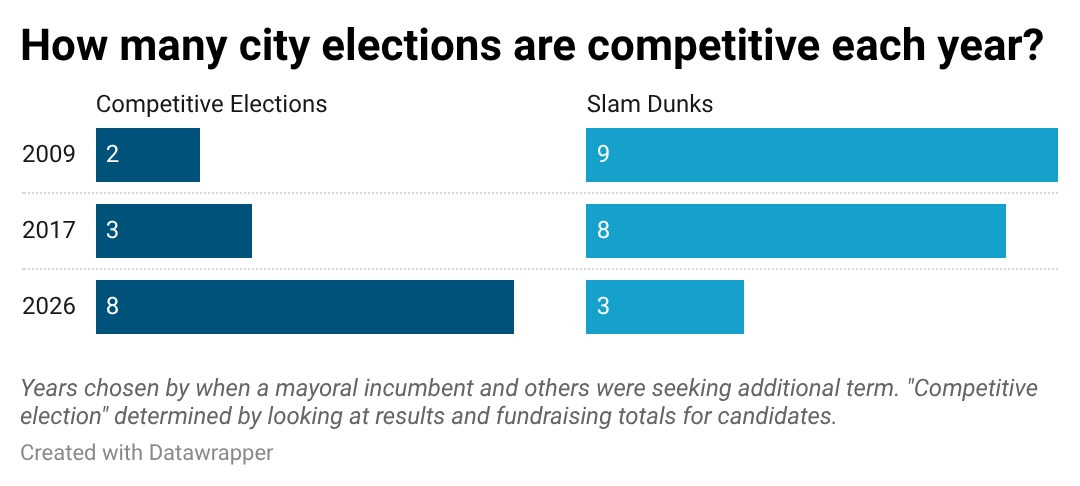
This was not the case the last time the trio of citywide officeholders were each seeking a second term. In 2017, Mayor Eric Garcetti crushed a field of token candidates, spending nearly $4 million and collecting 81% of the vote.
Two other incumbents that year, City Attorney Mike Feuer and Controller Ron Galperin, had it even easier — both ran unopposed. Somehow, in a city of 4 million people replete with lawyers and folks who know their way around complex spreadsheets, no one stepped up.
 Mariel Garza
Eight years earlier, in 2009, when Mayor Antonio Villaraigosa was seeking a second term, the situation was similar: No mainstream figure dared take on the entrenched incumbent. The race was a snoozefest, and Villaraigosa won in the primary with 55.7%. While not as commanding a victory as Garcetti would claim, no challenger surpassed 26%. (The city attorney’s race had no incumbent that year, and sitting Controller Wendy Greuel easily won a second term.)
For many years, it was the same in L.A. City Council contests. Challenging an incumbent seemed a foolish move and a great way to waste supporters’ campaign contributions. Again, consider the results in those two election cycles: In 2009, the seven council incumbents went 7-0; two ran unopposed, and the other five all earned more than 70% of the vote in the primary (one council seat was open that year). In 2017, seven council members were seeking re-election: all seven won, and only two faced real challenges (again, one seat was open).
This year, Feldstein Soto faces a trio of city attorney opponents, including California Department of Justice Deputy Attorney Marissa Roy, who is backed by the L.A. chapter of the Democratic Socialists of America and has already pulled in more than $800,000 through contributions and city matching funds. In the controller’s contest, Mejia has a challenger, Zach Sokoloff, a senior vice president for Hackman Capital Partners, who has vastly outraised him and earned the endorsement of U.S. Sen. Adam Schiff and the L.A. County Democratic Party.
The only L.A. candidate who doesn’t have to sweat at all this cycle is District 7 Councilmember Monica Rodriguez, who has no challenger for her San Fernando Valley seat. Two other council reps, Katy Yaroslavsky in District 5 and Tim McOsker in District 15, have opponents with little money (according to City Ethics Commission filings as of January) or name ID. They still have to remind residents why they were elected four years ago, but they seem likely to roll.
The District 3 and District 9 seats are open due to incumbents being termed out. Both are competitive, with three candidates running in the former, and six in the latter.
 Jim Newton
For the three council incumbents who are in dogfights, it’s a situation of moderate Democrats facing a DSA-aligned candidate. In Districts 1 and 13, progressive incumbents Eunisses Hernandez and Hugo Soto-Martinez are being challenged by a collection of moderate opponents. In District 11, incumbent centrist Democrat Traci Park faces DSA-endorsed attorney Faizah Malik. Attacks are flying in all three contests.
Why are city elections more competitive than they have been in decades? There are a number of factors, starting with the move in 2020 to align the city’s odd-year elections with the even-year calendar for state and federal elections. The shift significantly boosts turnout, especially among renters and younger people. Progressive groups have aggressively targeted this portion of the electorate, who were often overlooked in the past. Add in the rise of social media political marketing, and there’s more electoral engagement than there was two decades ago.
 Jon Regardie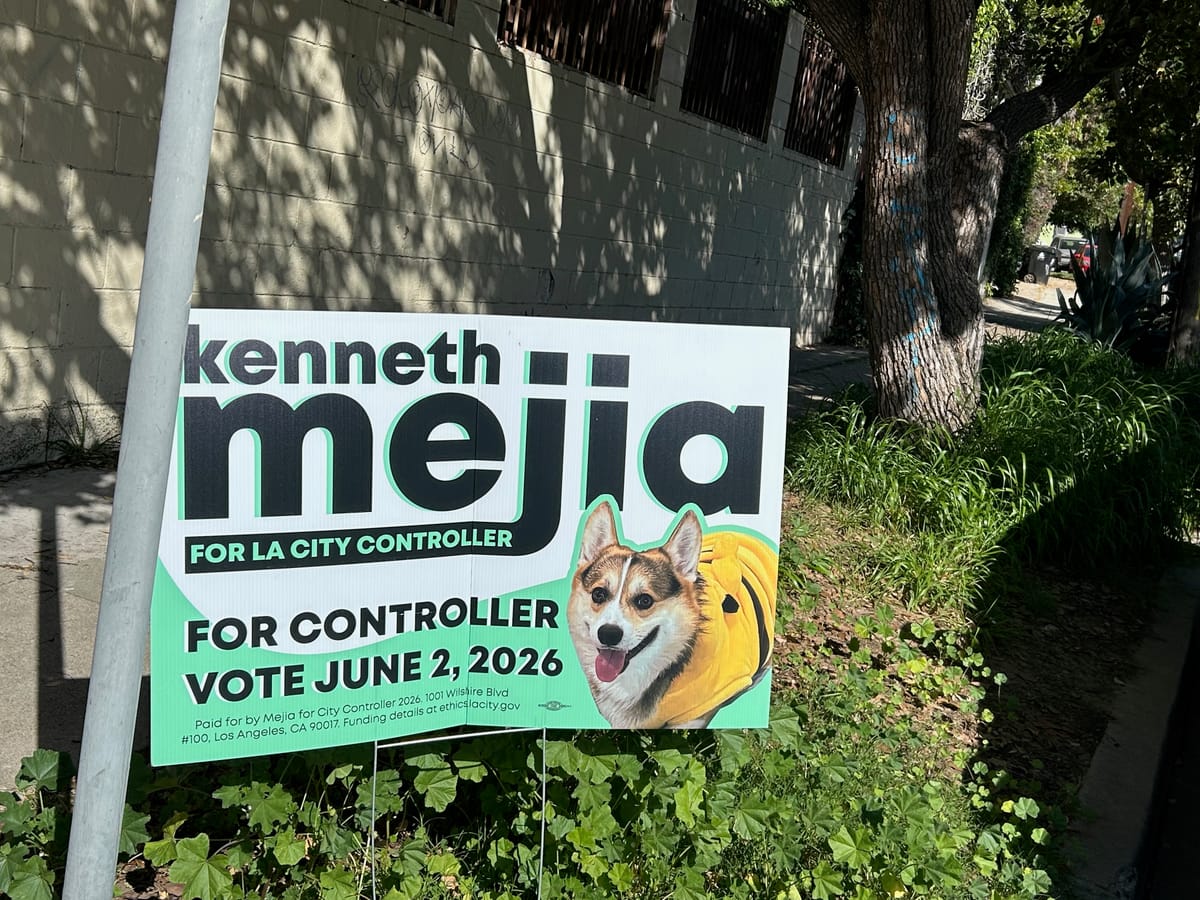
There are also different types of candidates. In the past, having an elected “starter job,” such as school board member or Assembly member, or working for an elected official, seemed to be a prerequisite to run for a city post. Now the path of entry is wider for candidates of all political leanings. Raman, Hernandez, Soto-Martinez, Mejia and another left-leaning councilmember, Ysabel Jurado, were all political outsiders who won in their rookie runs, as were the more moderate Park and Feldstein Soto.
None of the past results guarantees how things will go in June and then November. I’ve covered elections in Los Angeles for decades, and I can’t predict who’s coming out on top in numerous contests.
But that’s what great about this moment. Angelenos, not any sort of political machine, will determine the next round of city leaders. The only certainty is that when the polls close, ample choice means that the voters will be the winners.


