

A year ago today, wind-driven fires swept through the communities of Pacific Palisades and Altadena in what would become the worst wildfires in Southern California history. Thirty-one people died and more than 16,000 structures were destroyed.
The silver lining of these fires was that they served as a wake-up call for officials in the city, county, state and federal governments who parlayed outrage and concern into fast action: immediate payouts to fire victims, clear and supportive policies for rebuilding, and smart rules based on science to curb future destructive urban wildfires.
Hah. If only.
The reality is that over the past year, government at every level, from the mayor of Los Angeles to the U.S. president, delivered disappointment and inconsistency.
Much of this failure has been uncovered by the fantastic reporters at the Los Angeles Times, a reminder of why communities need journalists scrutinizing elected officials.
Let’s review:

Golden State is member-supported publication. No billionaires tell us what to publish. If you enjoy what you're reading, please consider upgrading to a paid subscription and support independent, home-grown journalism.
City of Los Angeles
Lachman fire left to smolder. Days before hurricane-force winds hit Los Angeles amid an epic eight-month dry spell, Los Angeles Fire Department officials mysteriously (because the public still hasn’t been given a justification) ordered firefighters to abandon the still-smoldering Lachman fire allegedly set by a 29-year-old Uber driver. It reignited the following week as the Palisades fire, with catastrophic consequences.
The mayor leaves town. Karen Bass exercised extremely poor judgment by leaving town to join a presidential delegation to Ghana, even though the National Weather Service was predicting damaging windstorms. When your town is facing peril, you stay put. It was all the more frustrating because Bass had said during her mayoral campaign she would stop traveling internationally if elected.
Lack of pre-wind prep. Despite an all-caps warnings of windstorms and the smoldering Lachman fire, the LAFD failed to pre-deploy fire trucks to hazard areas.
Bungled and inconsistent rebuilding. City leaders made big promises to survivors but delivered little. Bass pledged to waive permit fees and suspend Measure ULA, the so-called mansion tax, for Palisades fire victims, but neither promise has materialized. The mayor also made heads spin by announcing that people who rebuilt without using gas could get fasttracked approvals even while she suspended a city ordinance that requires new structures to be built without natural gas. (What happened to caring about climate change?) Meanwhile, the city allegedly permitted buildings in other high-fire hazard areas that violated fire codes. Sheesh.
Things might have gone better if the mayor hadn’t bungled the appointment of a recovery czar.
 Lisa Kaas Boyle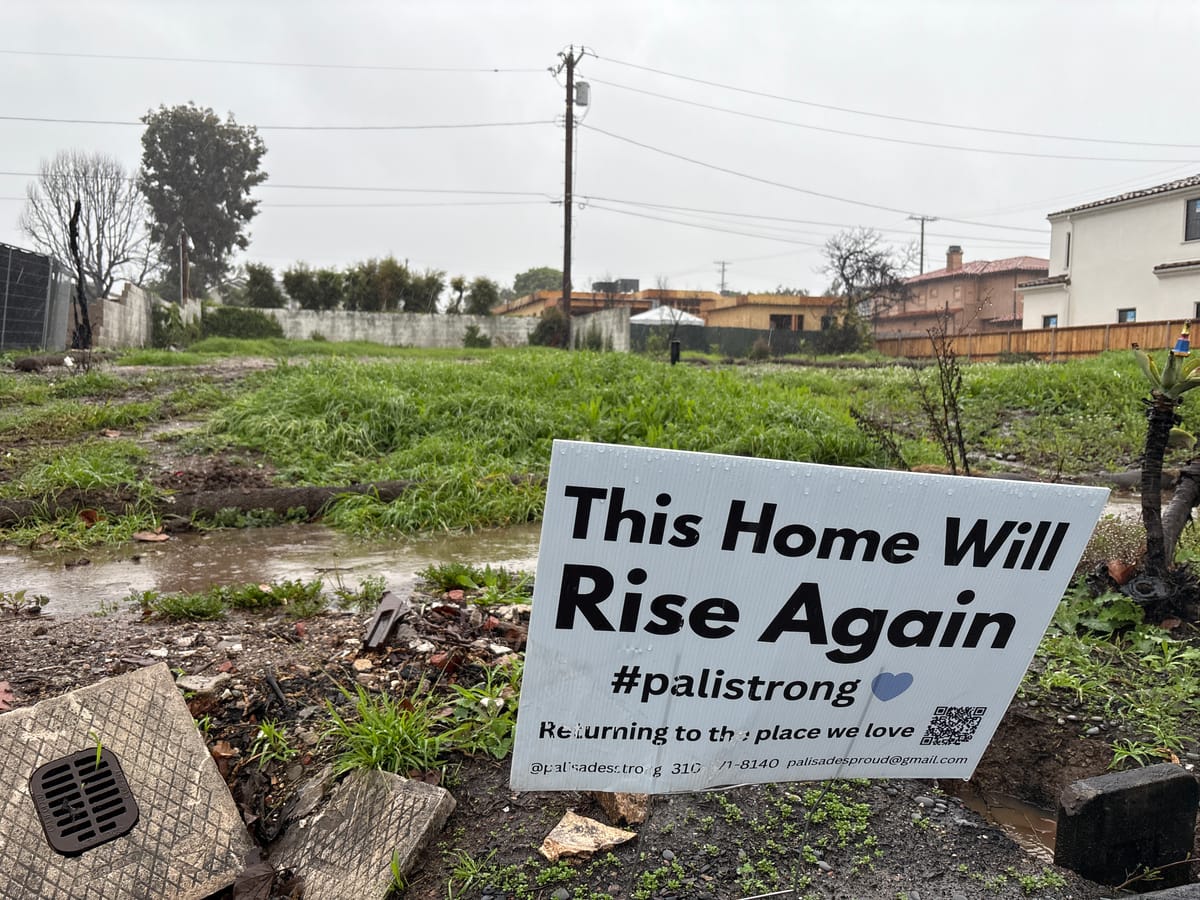
And finally, a cover up. No one in the city took much responsibility for anything. The fire chief blamed the city for underfunding the department; the mayor blamed the fire chief (and replaced her); and the new chief blamed the media for reporting the facts. And in the end, what was supposed to be a clear-eyed after-action report was watered down to make the city look better.
County of Los Angeles
West Altadena left on its own. The county emergency alert system failed to send evacuation orders to residents west of Lake Avenue in Altadena for hours after flames were bearing down on them. Furthermore, the county fire department, which serves unincorporated communities such as Altadena, also failed to deploy trucks to the west side of town until hours after homes were already burning. Of the 19 deaths in that community, 18 happened west of Lake.
 Paul Thornton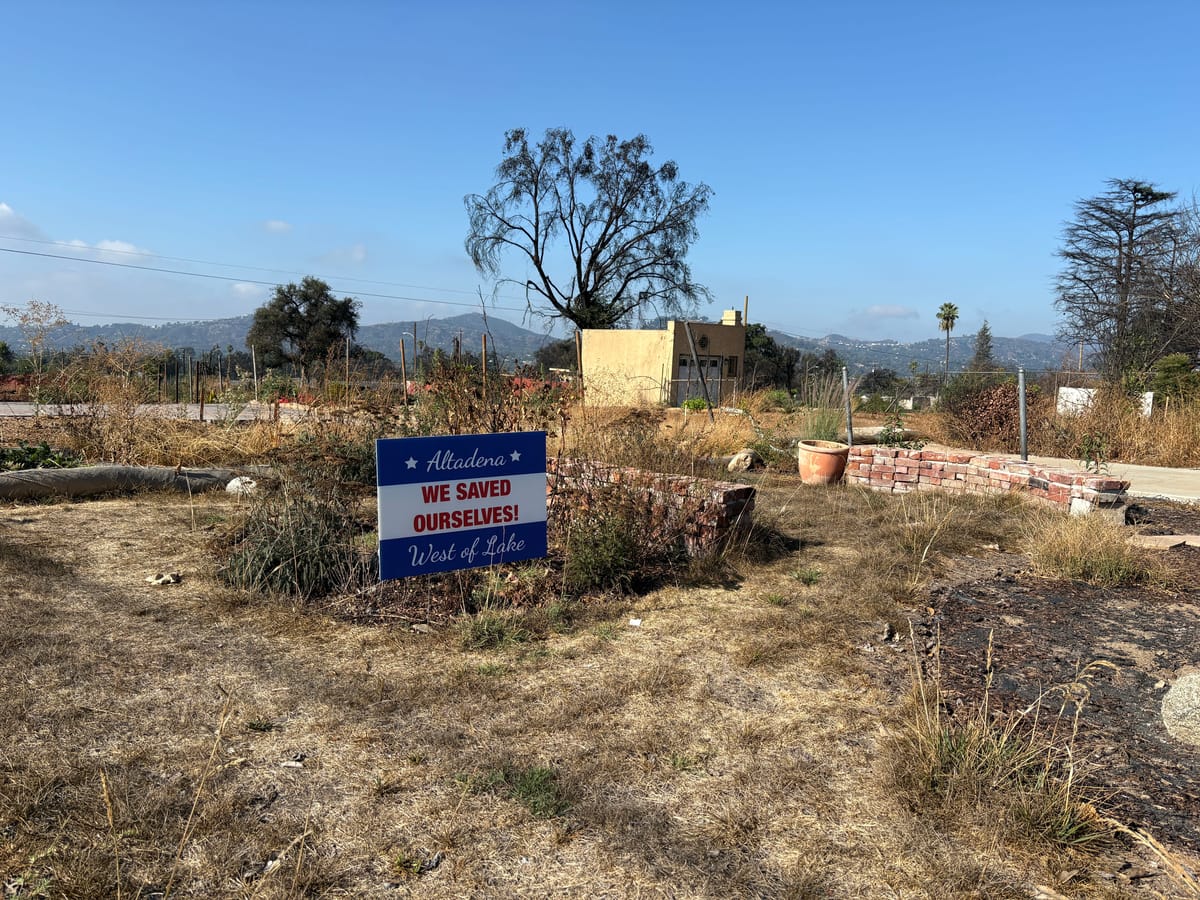
Little accounting. The county’s report, released in September, was a big dud that only raised more questions. The county fire department is reportedly conducting its own investigation. We’ll see if it’s any better at taking responsibility than the city’s.
No one in charge. Perhaps if there were a county mayor (and one day soon there will be the equivalent), there might have been someone responsible for compelling answers about the failures of county agencies. Unincorporated Altadena is overseen by County Supervisor Kathryn Barger, who as one of five county supes has no executive power. Though to her credit, she has been a loud and consistent voice of support for Altadena.
State of California
Flubbing fire safety regulations. In February, Gov. Gavin Newsom ordered the members of the state's Board of Forestry to get off their butts and finalize “zone zero” rules by the end of the year. It didn’t happen. The proposal released this summer to limit ember-ignited urban fires was widely criticized in Southern California for being overly simplistic because it treated all areas of the ecologically and geographically diverse state the same and failed to consider new research indicating protective qualities of well-watered vegetation.
 Mariel Garza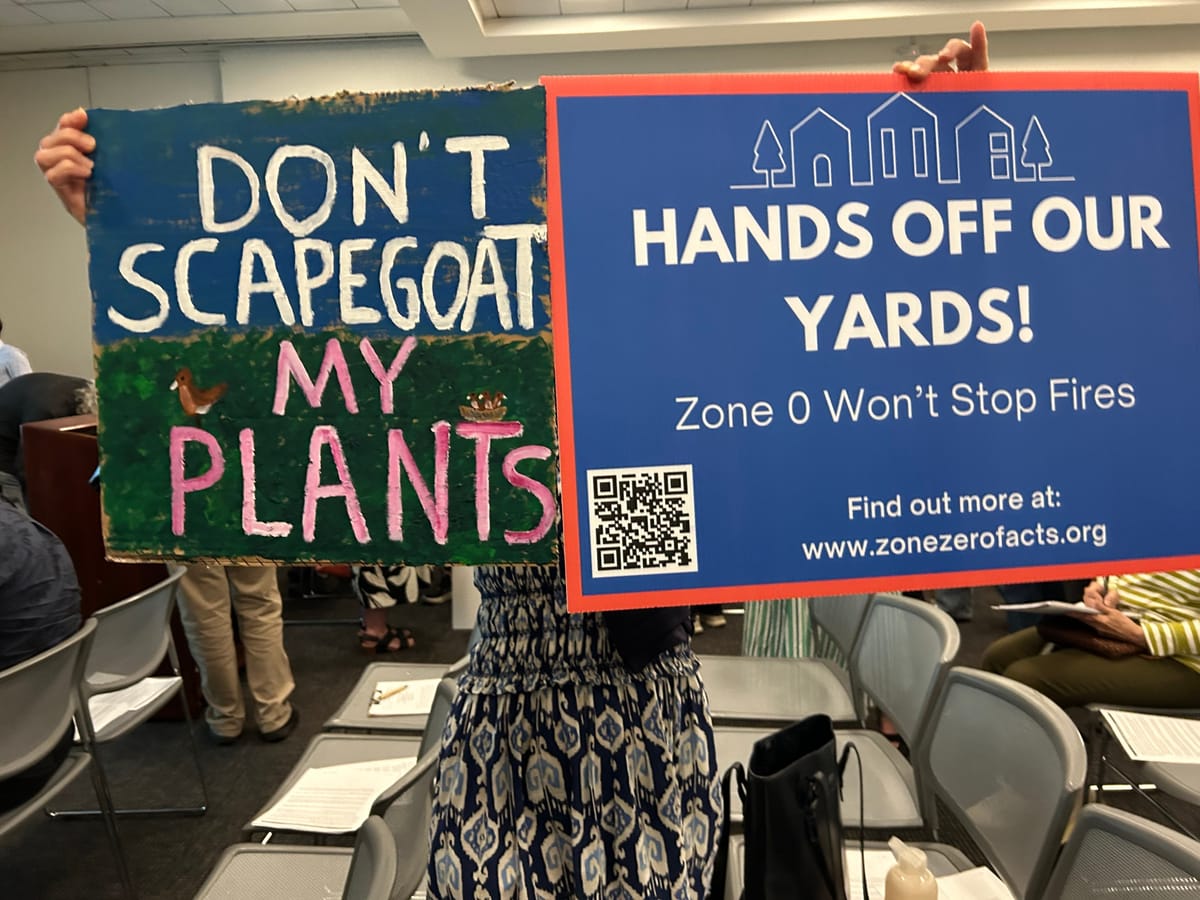
Attorney general a no-show. The county’s lame fire report suffered from a lack of participation by several fire agencies. That prompted many Altadena fire survivors to urge Attorney General Rob Bonta to launch an investigation into the fire response and compel agencies to answer. Still no word if he will, though it is not an unreasonable ask: The AG’s office assisted Cal Fire in its investigation of the Camp Fire in 2017.
Letting utilities continue to cause fires. Most of the worst wildfires in California in the last decade – the Camp fire, the Tubbs fire, the Thomas fire – weren’t acts of God. They were caused by downed or damaged power lines. The Eaton fire appears to have been ignited by old, dormant transmission lines that spontaneously reenergized. I didn’t know that could happen, but apparently state regulators did. And yet it wasn’t until nearly a year after the Eaton fire that the Public Utilities Commission ordered Edison to look for other fire risks on dormant lines.
Federal government
A big Trump dump of precious water. President Trump falsely claimed the state’s water policies caused the fire devastation. To support his cockamamie story, he ordered the Army Corps of Engineers in February to release billions of gallons of water from two Central Valley reservoirs, flooding fields that did not need it.
Playing politics with disaster recovery funds. California received about $6 billion in Federal Emergency Management Agency funds authorized by former President Biden. Newsom has asked the Trump administration for tens of billions more. The president suggested he might condition the relief on the state adopting policies such as voter ID. But it’s still not clear why, nearly a year later, the state is still waiting for help.
Terrorizing construction workers. Just as rebuilding efforts were getting going, U.S. Immigration and Customs Enforcement agents began to round up the very people needed for construction work. More than 60% of the state’s construction workers are immigrants, about a quarter of whom are undocumented. These critical laborers should have been offered a path to green cards and even citizenship. We desperately need their skilled labor.
This is by no means the complete list of the ways government failed to prepare or respond to the fires. But it does make it clear why so many people burned out of their homes and businesses in Pacific Palisades and Altadena feel as if they have been let down by those they should have been able to trust.


