Mary Lynne Vellinga, a former city editor of the Sacramento Bee, was chief of staff to former Sacramento Mayor Darrell Steinberg. Dan Morain, a former L.A. Times reporter and Sacramento Bee editorial page editor, is working on a book about the mental healthcare system. He is on Substack at substack.com/@danielmorain.
On a brisk Sacramento evening in late January, we joined hundreds of volunteers carrying flashlights and wearing reflective vests and armbands, looking to find the people left behind, the ones most of us usually avoid.
A 74-year-old man rearranged items in his home, a 1997 GMC Sierra pickup truck with expired registration tags.
A 37-year-old woman whose possessions filled a shopping cart said she had never lived indoors after leaving her childhood home.
A man told us he had mental health issues and a developmental disability but no problems with substance abuse. He was sitting next to a wine bottle and holding a pipe.
 Jim Newton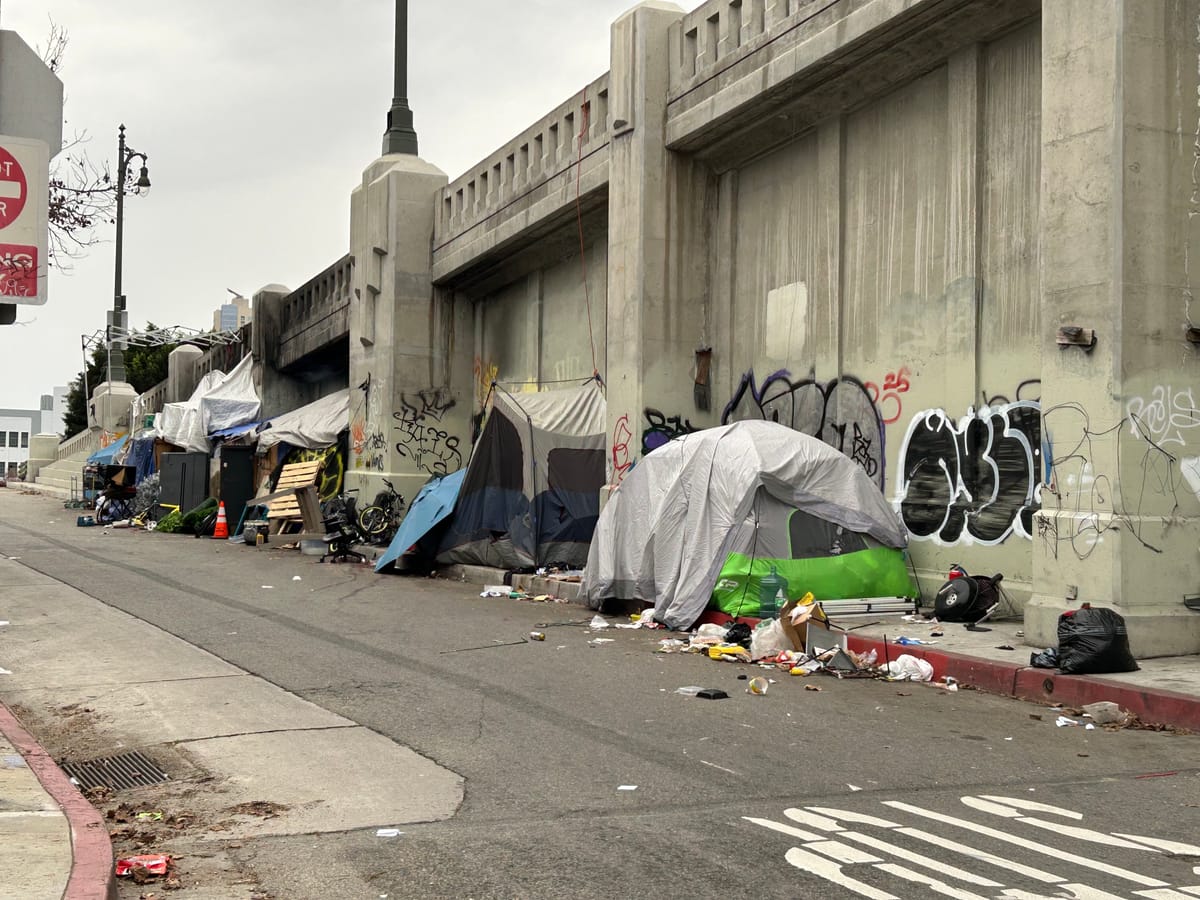
As thousands of people prepared to bed down in cars, tents or on the bare ground in California’s capital city, we roamed vacant lots, shopping center parking lots, roadsides and parks looking to tally them for a point-in-time count, or PIT. This census is conducted each year or two in communities around the state and country to measure the problem of homelessness and to satisfy federal funding requirements.
We – two former newspaper journalists, along with one Episcopal priest – were one team among about 800 volunteers who participated in this year’s bi-annual Sacramento County PIT Count, organized by the nonprofit group Sacramento Steps Forward. In 2024, the census yielded a count of 6,615 people. Of these, 3,944 were living outdoors or in vehicles, a 41-percent drop from 2022.
Since then, the number of people engaged with the Homeless Response System in Sacramento County has grown, reaching 9,049 at the end of December. But that growth could be the result of greater efforts to get people enrolled in services and may not signal an increase in the PIT count.

Golden State is a member-supported publication. No billionaires tell us what to do. If you enjoy what you're reading, please consider upgrading to a paid subscription and support independent, home-grown journalism.
The results of this year’s count are scheduled for release in May.
Our team had considerable experience with the issue of homelessness – either in helping craft policy, writing articles and a book or providing direct services. Yet our experience on this single evening was illuminating – a reminder that everybody has a story to tell, and if you stop and listen, those stories can touch your heart.
It was also a reminder that the variety of individual circumstances that put a person on the street makes the problem maddeningly difficult to solve.
Homelessness is a housing problem. It’s a poverty problem. It’s an education problem. It’s a job-market problem. And it’s a problem of substance abuse and mental illness.
We were assigned to survey a part of the city around Sacramento Executive Airport, where there aren’t large encampments. We found people tucked out of the way, in ones and twos, and we interviewed a half dozen of them at length, tapping their answers into an app on our phones.
One of the questions was what they thought society could do to help them exit homelessness. Each person interviewed received a $10 Subway gift card. All were friendly and seemed eager to talk. We did not record their names. Organizers of the count promised anonymity, so we are not including names here.
 Jon Regardie
A man in his mid-60s initially saw us approach and stepped out of his vehicle, asking if we “had a problem.” When we told him we had come to learn how he could be helped, he readily told his story.
He said he had lost his construction job during the pandemic, and then his home. He was living on Social Security, but it wasn’t enough to pay rent. At first, he had lived in an RV. But he lost all his belongings when it was towed. Now he lives in his car. He said he would love to work again if someone would give him a chance. He suggested job training and more affordable senior housing would help. We shook his calloused hand and moved on.
Nearby, we found the 74-year-old man, who parked his pickup behind a south Sacramento strip mall, past dark storefronts save for one with a neon sign advertising “Massage.” He said he had bought the truck in the late 1990s for work, but now uses it as his home. His eyes welled up as he described how he wakes up every 15 minutes in fear, and how his untreated hernia makes controlling his most basic bodily functions difficult. As he answered our questions, he fiddled with a stretch of twine around his waist, unsuccessfully trying to cinch it into a makeshift belt.
He spoke about his father, a factory worker in the industrial East Bay city of Pittsburg, and mentioned a three-year stint in prison.
What do you think? Golden State is a public forum. Send us your responses for possible publication in the future.
When he was young, he had a business selling and installing hot tubs. He landed on the street when his beloved brother, with whom he’d lived, died, and he could no longer afford the rent they’d shared.
Lately, he said, he’d become so depressed and lonely he’d begun talking to himself. If he could find an apartment he could afford, he would be glad to get off the streets. Even a safe place to park the truck at night, he said, would be a big improvement.
We had to go. He invited us to visit him again.
Next, in the parking lot of a rundown apartment house, a young man with dreadlocks sat with his girlfriend in a 1990s sedan. They said they were living in the car and both agreed to take the survey.
We cut our questions short after a young woman appeared, walking unsteadily toward the car and clutching her abdomen. Her face glistened with sweat. She said she was homeless too and would happily answer the survey except that she was in labor, and the man in the car and her sister in the passenger seat needed to take her to the hospital.
After giving them Subway gift cards, we wished them good luck. Clearly, they hadn’t seen much of that in their lives.
We drove off into the night toward our warm beds.
 Paul Thornton