

By Jim Newton, special for CalMatters
Jim Newton is an author and journalist who worked for 25 years as a columnist, editor, reporter and bureau chief at the Los Angeles Times. He teaches at UCLA and founded Blueprint magazine. This commentary was originally published by CalMatters. Sign up for their newsletters.
An idea with a long history is bubbling its way back to the top of the policy pot in Los Angeles, and voters may — or may not — soon get a chance to decide it: Should the city be served by a larger council, one whose members serve significantly smaller districts?
It’s a controversial notion, but one that voters at least deserve the right to consider.
Last week, the city’s charter reform commission recommended that voters be allowed to consider expanding the City Council from the current 15 to 25 members. That’s a significant step forward, though the council itself — which has often been an impediment to this idea — still has to clear the measure for the June ballot.
Council expansion has captured the attention of reformers for decades. Some argue that the city, long at the leading edge of American immigration and diversity, has outgrown its current setup.
That structure, with a mayor elected citywide and 15 council members, each representing districts, has existed for just over a century. The city charter established it in 1925, when the region’s acquisition of a water supply spurred development of the San Fernando Valley and launched a decade of galloping growth.

Golden State is a member-supported publication. No billionaires tell us what to do. If you enjoy what you're reading, please consider upgrading to a paid subscription and support independent, home-grown journalism.
Back then Los Angeles had about 600,000 residents and was overwhelmingly white. The city’s mayor, George Cryer, was a Midwesterner and a Republican whose legacy included the construction of City Hall and the Los Angeles Memorial Coliseum. It was during his tenure that Los Angeles surpassed 1 million residents, many of them migrants from the South and Midwest.
What that meant was, in 1925, each member of the Los Angeles City Council represented about 40,000 people. The districts had some variety — some were wealthier than others — but less than a fifth of LA’s residents were Latino and its Black population, though rising rapidly, still totaled less than 25,000 people.
Today’s Los Angeles is home to about 4 million people. Its largest ethnic group is Latinos, who make up about half the city’s residents. Blacks comprise 9% or so, and the city is, of course, home to immigrant communities from around the world.
 Jim Newton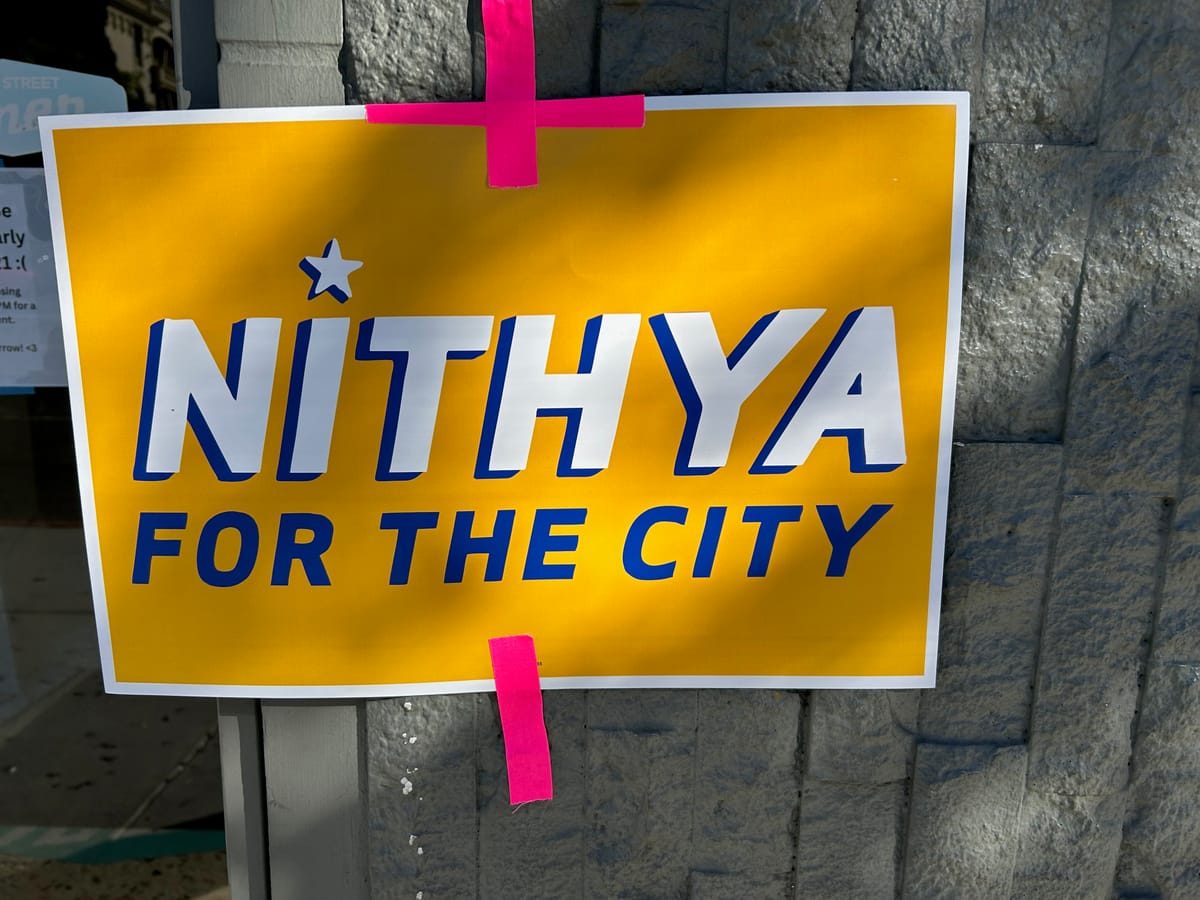
A bigger council for smaller districts
Its politics are liberal to very liberal, and the current mayor’s race is a contest between an African American woman, incumbent Karen Bass, and a South Asian woman, Councilmember Nithya Raman.
In short, Los Angeles has changed a lot since 1925. City Council, though, remains structurally unchanged —15 members representing 15 districts. Whereas the districts once comprised 40,000 people, now they’re home to some 265,000 people each.
If the council expanded to 25 members, each would represent 160,000 people.
Moves to expand the council have kicked around for decades. In the late 1990s, then-Mayor Richard Riordan launched an overhaul of the city charter, and though his goals were more about streamlining authority and strengthening the mayor’s office, two commissions considering reforms took up council expansion as a means of improving representation.
Smaller districts, the thinking went, would mean more cohesive ones. The city’s Korean-American community, for instance, might command one district. Or Filipino or Guatemalan residents, who have considerable populations but whose numbers are swamped by other groups in existing districts, might exert more authority in their areas.
Smaller districts would have other benefits, too.
 Julie Marquis
Council members are part of a city legislature and vote on city ordinances and priorities, but they also act as administrators for constituents, interceding when residents run up against bureaucracy, lending assistance to residents trying to access city services or navigate city rules. Smaller districts could mean constituents would get more individualized attention.
Those assumptions have kept the idea of council expansion alive, but it’s had significant opposition, too, starting with the council itself. Many members see the expansion idea as diluting their power, reducing them to smaller political figures.
Other critics worry that a larger council would be more expensive for taxpayers and not fundamentally more responsive to the public.
Still, Los Angeles is a standout among major cities. New York, with a larger population than LA, has a council of 51 members, each representing about 172,000 residents. Chicago, with a smaller population, has 50 alderpersons, each representing about 50,000 residents.
In California, San Francisco has 11 members representing a city of about 840,000 people, meaning each member represents a district of about 76,000 people — about a third the size of LA’s. San Diego, the state’s second-largest city with a population of 1.4 million, has nine council members, or one for every 155,000 people — again, districts smaller than Los Angeles would have even if it approves council expansion.
Erwin Chemerinsky, dean of the law school at U.C. Berkeley and president of the Los Angeles charter reform commission back in the 1990s, has been around this issue for a long time. He is a stalwart supporter of council expansion. I reached out to him this week to ask whether he still favors the idea, and he made it clear his view remains unchanged.
 David Freed
“Is it desirable to increase the size of the City Council? Unquestionably, the answer is yes,” Chemerinsky said. “More council districts means fewer constituents per council member.”
But Chemerinsky also has been around the politics of this issue. In 1999, when his commission and an appointed commission merged their work and produced a proposed city charter, the members of the panels were worried enough about how voters would respond to council expansion provisions that they broke those out as separate ballot measures: one that would have added six members to the existing body and one that would have added 10.
They were right to be worried. Los Angeles voters adopted the main charter as written by Chemerinsky and his colleagues, but they rejected both council expansion options. As Chemerinsky recalled, the focus groups consulted by the charter reform commissions warned then that if council expansion “had been part of the overall charter proposal, it would have caused it to be defeated.”
Politics is framing. Some of the opposition may come down to how the question is presented. The same people who might vote against “expanding the City Council” might vote for “reducing the size of council districts.”
First, though, it will be up to the council to decide whether voters get that chance at all. It would be a shame to deny them the opportunity.
What do you think? Golden State is a public forum. Send responses for possible publication to forum@golden-state.org.


